Beyond the Plate: Teaching the Merroir of Bivalves
How Washington clams and mussels teach culinary students flavor, place, and marine stewardship.
Key Takeaways
Flavor as Geography: Bivalves provide students a direct, hands-on demonstration of merroir—how environment shapes taste.
Core Technique Over Recipes: Cooking identical dishes with different species highlights species-specific qualities and builds culinary adaptability.
Beyond the Kitchen: Understanding shellfish connects students to marine stewardship, local working waterfronts, and effective guest communication.
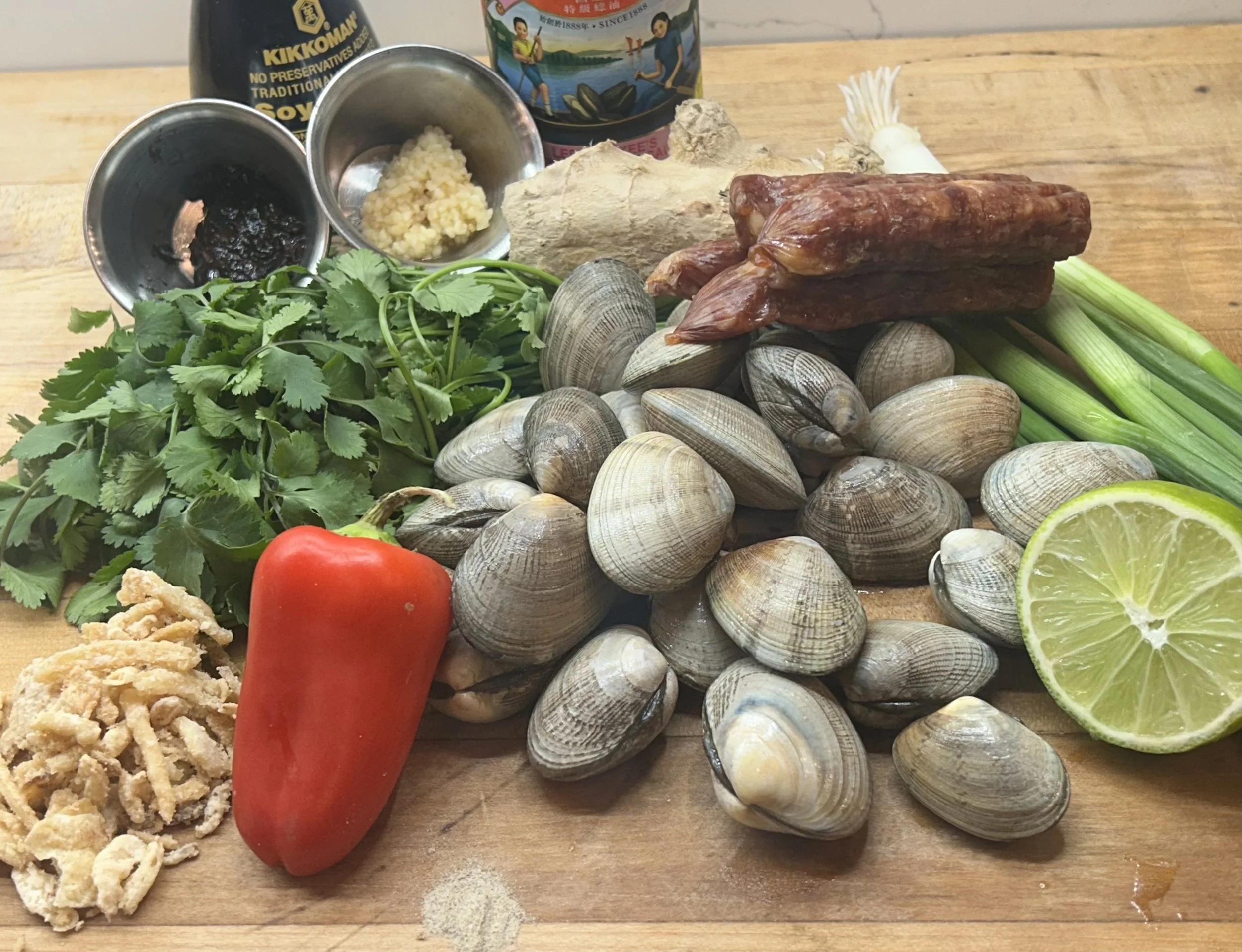
Where the magic begins…
I have found that seafood offers culinary students an unusually direct way to explore the relationship between food and place. Few ingredients demonstrate that connection as clearly as bivalves, particularly here in Washington State.
Washington has an exceptional relationship with farmed shellfish. The state is a leading U.S. producer of farmed Manila clams and geoduck—the world's largest burrowing clam—with both species grown on the tidelands of Puget Sound. Washington is also a significant producer of farmed marine mussels. For my students, that means the concept of merroir is not an abstract idea that belongs somewhere far away. It is something that exists in the waters, tidelands, farms, and working waterfronts that surround us.
Clams and mussels respond to their growing environment, and they carry some of those characteristics to the plate. When I teach students to taste different bivalves side by side, I am introducing them to merroir: the influence of species, environment, benthos, food, climate, and tradition on the flavors and characteristics of seafood.
"I teach merroir as both a culinary concept and a practical tool. Students learn to recognize differences in species, but they also learn how to communicate those differences to a customer."
The ability to explain why a particular clam tastes the way it does, where it comes from, and how its environment contributes to the dining experience can help connect a guest to the journey from tide to table. For me, that connection is one of the most valuable things we can teach.
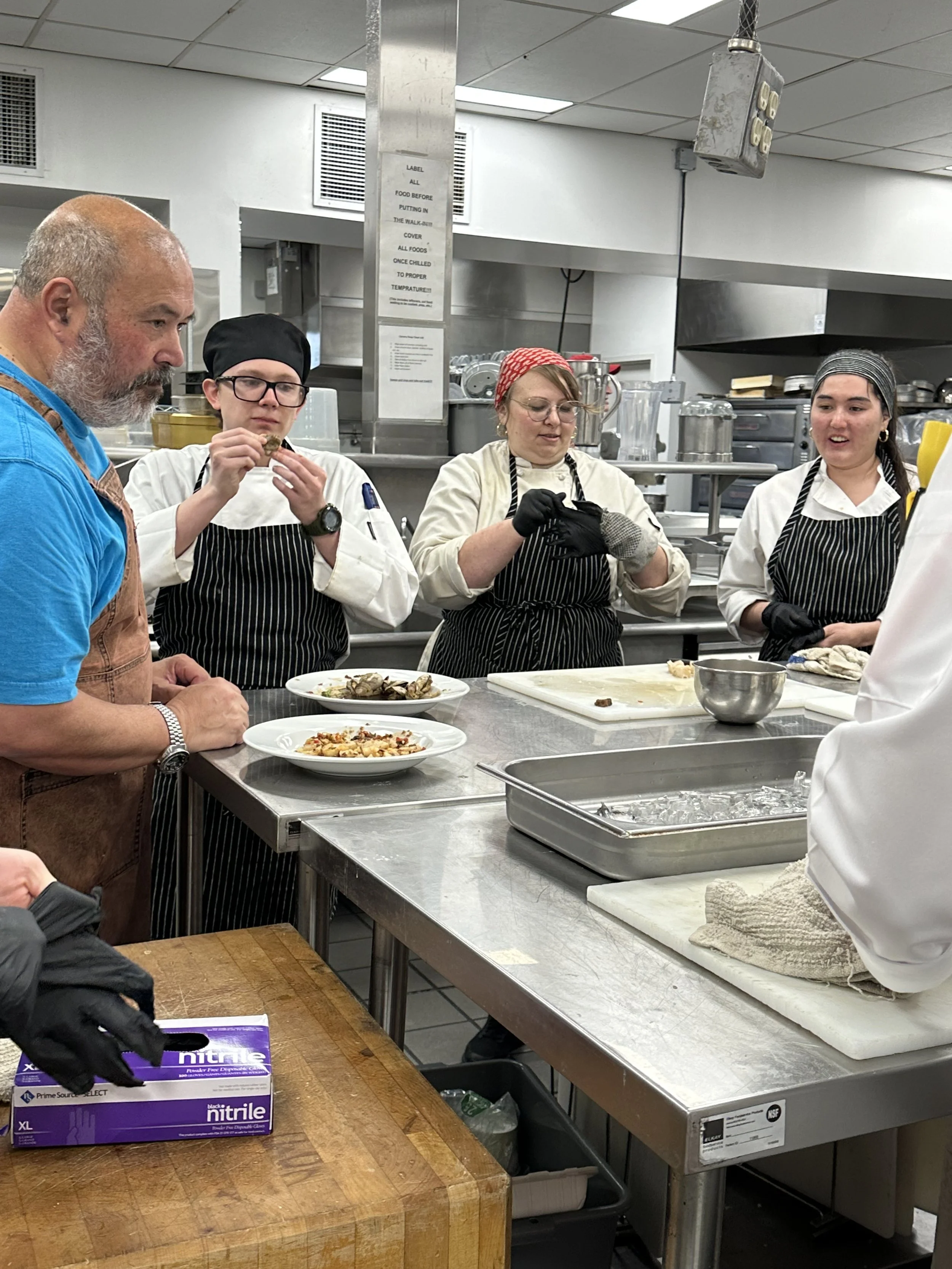
Some student’s experiencing shellfish for the very first time.
Bivalves as a Lesson in Place
Clams are among the most familiar seafood products in the United States. Much of the clam consumed by weight is eaten at home, often in processed forms. In restaurants, however, whole, fresh clams are more frequently featured, particularly in preparations where the shellfish is presented in the shell. Clams are also central to dishes such as clam chowder, where both the meat and the intensely flavored liquor contribute to the finished dish.
On the West Coast, my students may encounter Manila clams, littleneck clams, and Pacific razor clams, as well as butter clams, geoduck, and other native species. Some are farmed, while others come from wild or artisanal fisheries. Mussels provide another excellent classroom example. They are commonly sold and served whole, and their natural presentation makes them particularly useful for teaching students how to cook and serve seafood as a complete ingredient rather than as a processed commodity.
When I put several bivalve species in front of my students and ask them to prepare them using the same basic technique, the classroom becomes a tasting laboratory. We can compare the shellfish side by side and begin to identify differences in sweetness, salinity, texture, richness, and intensity. That is where merroir becomes more than a vocabulary word—it becomes something students can taste.
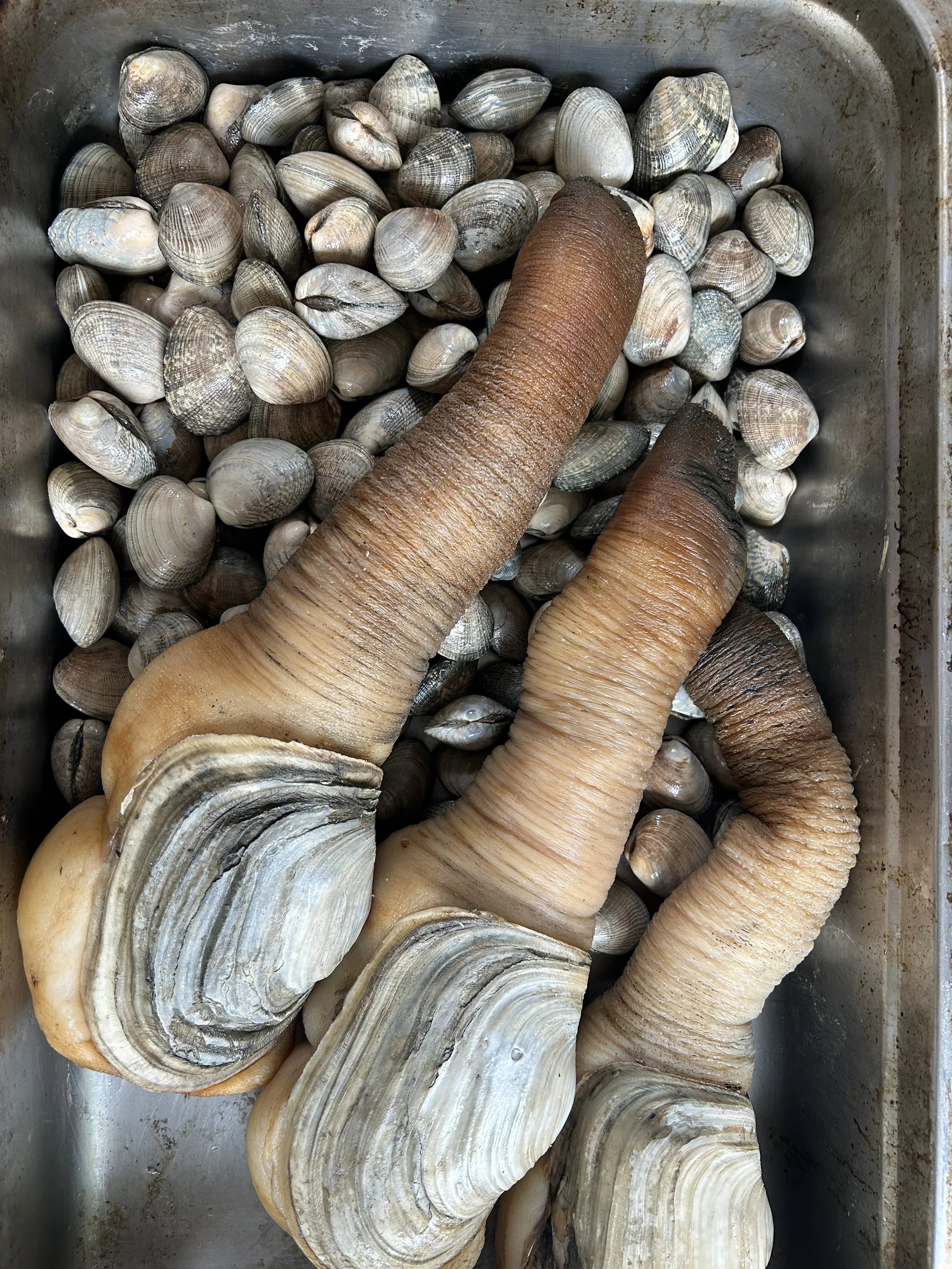
A range of clams from Manila to Geoduck.
Cooking the Same Dish With Different Bivalves
One of the most effective ways I have found to teach merroir is to keep the cooking method relatively consistent while changing the species. There are three styles of preparation I particularly like for this purpose: a Hong Kong-inspired preparation with fermented black bean and Chinese sausage, an Iberian-inspired preparation featuring sausage and shellfish, and a Mediterranean or Italian-style preparation built around tomatoes and basil.
What makes these dishes so useful in a culinary classroom is their flexibility. Students can work with small clams such as Manila or littleneck clams, using the entire animal, or they can work with larger species such as razor clams or geoduck, removing the meat from the shell and cutting it into strips. Mussels can also be incorporated into the same preparations. This flexibility allows me to teach a consistent set of techniques while giving students an opportunity to observe how the ingredient changes the final dish.
The Hong Kong-style preparation, for example, pairs bivalves with fermented black bean paste and Chinese sausage. The fermented bean and sausage provide salt, depth, and umami, but they do not overwhelm the shellfish. The natural sweetness of the clams or mussels remains at the center of the dish. It is also an engaging dish to cook: there is movement in the pan, aromas develop quickly, and, when handled correctly, even a bit of dramatic flame. Beneath that show are fundamental culinary skills: sautéing, heat management, timing, and understanding how ingredients respond to high heat.
The Iberian-inspired preparation teaches a similar lesson: supporting ingredients should enhance, not overpower. While sausage, paprika, parsley, and citrus lend richness and complexity to the backing sauce, shellfish remains the primary focus. The regional sausages and spice profiles anchor the dish in a specific culinary region, yet the fresh shellfish grounds the diner firmly in the tidelands of the Salish Sea.
A Mediterranean or Italian-style preparation shifts the flavor profile toward bright summer ingredients such as tomatoes and basil. Once again, the supporting ingredients change, but the teaching principle remains the same: the bivalve is the star. Because these preparations require relatively few ingredients, students can concentrate on the ingredient itself and on the techniques needed to cook it properly. More importantly, they begin to understand that the same cooking method can reveal vastly different qualities in different bivalves.
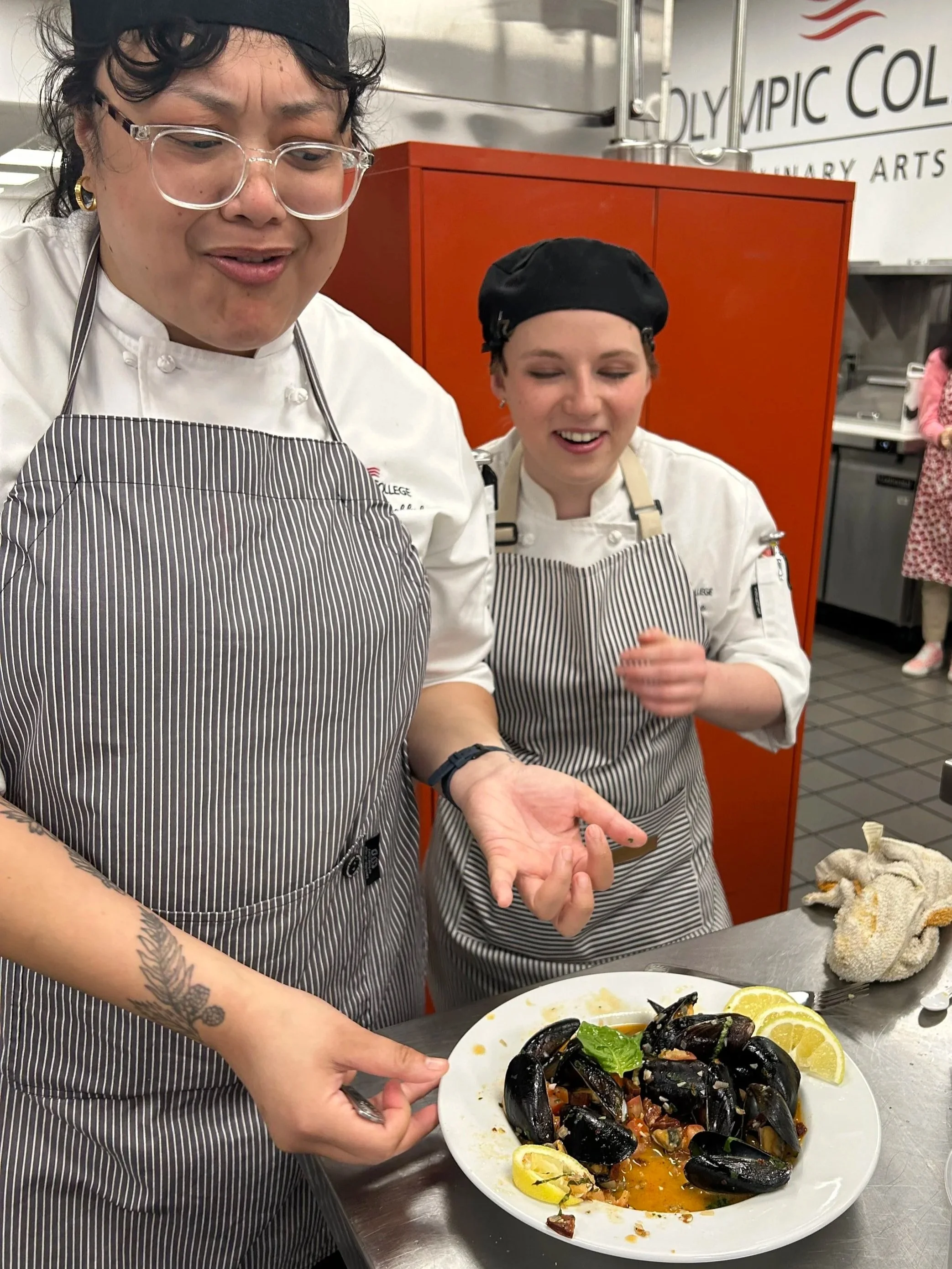
Student’s enjoying their dishes.
Letting the Shellfish Make the Sauce
One of the most important lessons bivalves can teach is that the ingredient often contains much of what the cook needs to build the dish.
As clams and mussels open during cooking, they release their natural liquor. That liquid contains concentrated shellfish flavor and becomes the foundation of the sauce. It is literally an aquatic snapshot of the last place the shellfish was feeding in the ocean. The salinity, the feed, and the culture method can all be expressed in that tablespoon of seawater that the bivalve so tightly held onto before releasing it into the sauce.
I like this lesson because students see it happen right in front of them. A small amount of olive oil provides fat. Aromatics and vegetables contribute additional flavor. Wine or another cooking liquid provides acidity and complexity. But much of the finished sauce comes directly from the shellfish.
"Instead of beginning with a complicated recipe and adding seafood at the end, students learn to begin with the seafood itself and build around what it naturally provides."
This lesson becomes particularly interesting when comparing small and large bivalves. A Manila or littleneck clam contains relatively little meat but can release a surprising amount of flavorful liquor. A geoduck or razor clam, by contrast, provides a substantial amount of meat but may not release much liquor beyond the moisture trapped within the flesh. That difference creates an opportunity to teach culinary problem-solving. Students may supplement the sauce with stock or, preferably, additional clam juice. What matters is understanding how to preserve and reinforce the primary ingredient rather than masking it.
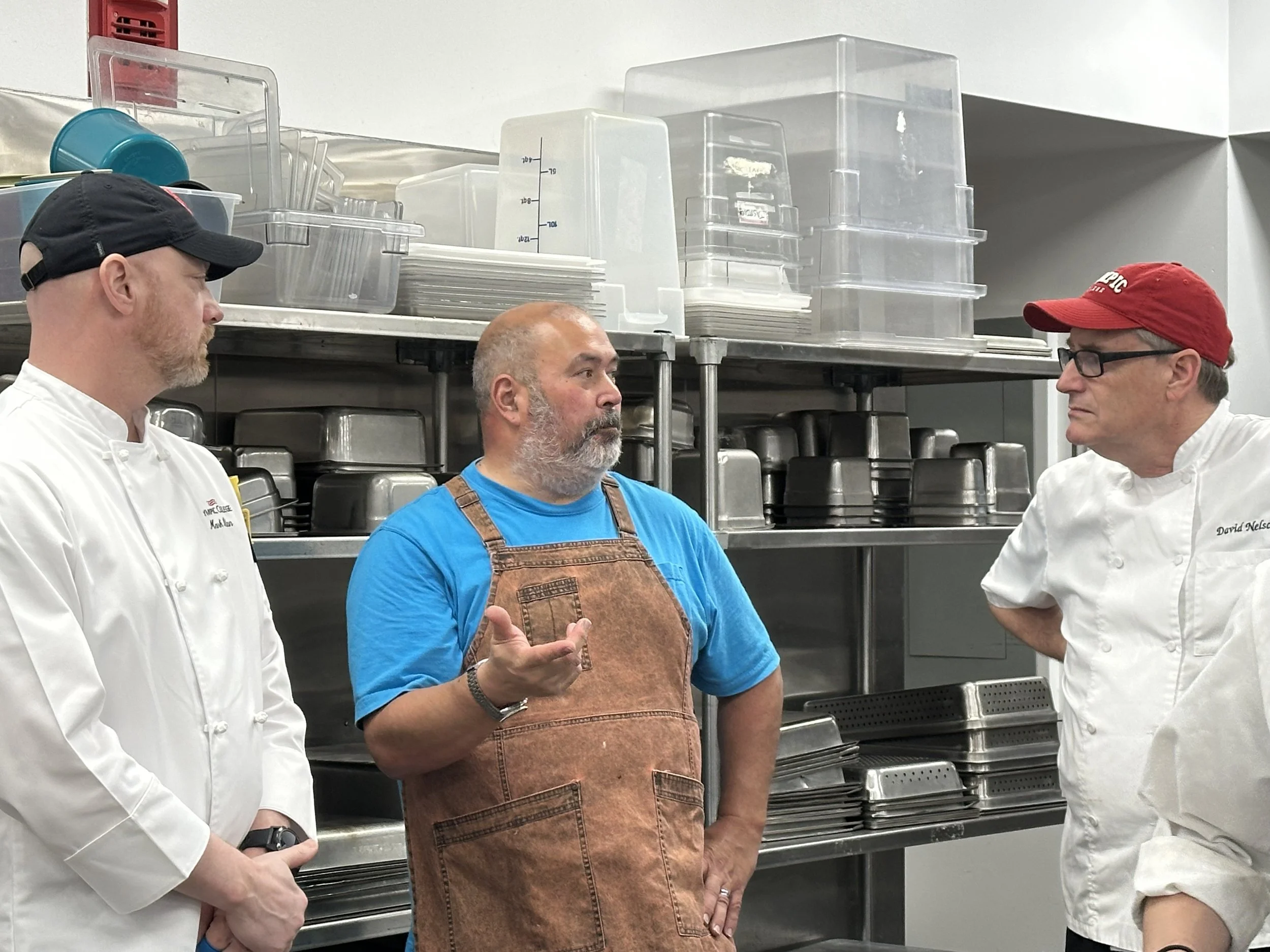
Working with Culinary Instructors at Olympic College.
Teaching Principles Rather Than Recipes
The greatest value of these dishes may be that they do not require students to follow a rigid formula. I want my students to understand the principles behind a recipe so they can make decisions when circumstances change.
The same basic preparation can lead in several directions:
Olive oil, white wine, and shellfish liquor produce a light, clear sauce.
A small amount of cream transforms it into a richer white sauce.
Tomatoes move the dish toward a red sauce.
Additional stock turns it into a broth substantial enough to serve on its own.
The finished preparation can be served with crusty bread, over rice or pasta, or alongside couscous. These variations allow students to make decisions rather than simply execute instructions. A student who can follow a recipe has learned one skill. A student who understands why the recipe works can adapt that knowledge to a different species, a different kitchen, a different menu, or a different set of available ingredients. Bivalves make that transition particularly tangible.
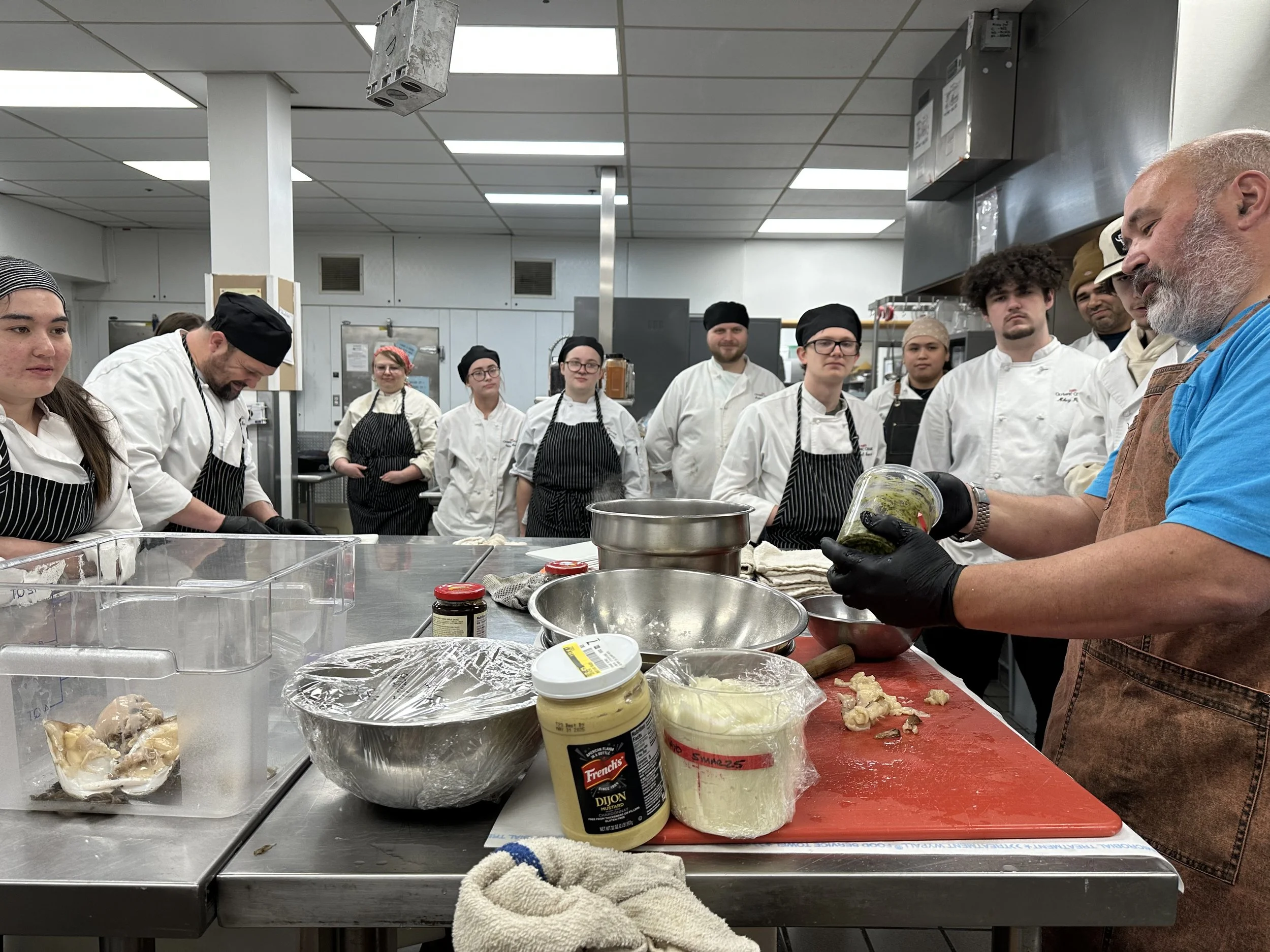
Getting immediate feedback from the students can be as powerful for Tagal Oceanic as learning about Merroir is for the student population.
Making Merroir a Tasting Exercise
I do not think merroir should be taught only as a formal tasting course; it can be incorporated naturally into the cooking process. I prepare two or three bivalve species using the same technique and ask students to taste them side by side while discussing their observations:
Which bivalve is sweetest?
Which has the strongest briny character?
How does the texture differ?
Does one have a more pronounced mineral or oceanic quality?
Which produces the most flavorful liquor?
How does each species change the flavor of the dish when paired with the same cooking technique?
Does the growing environment seem to influence what they taste like?
There are no wrong answers to these questions. The objective is to get students to pay attention. Two bivalves may look similar on the plate, but they produce noticeably different culinary experiences. Recognizing those differences is an important step toward becoming a knowledgeable cook.
It also introduces students to the idea that seafood has a story of place. Species, environment, benthos, food, climate, and tradition all contribute to what ultimately reaches the plate. In Washington, that story is especially tangible. When students taste a geoduck or Manila clam grown in Puget Sound, they are tasting an ingredient directly connected to the region in which we live and work. That creates an opportunity to talk about the people who grow and harvest these animals, the working waterfronts that support the industry, and the importance of maintaining healthy marine environments.
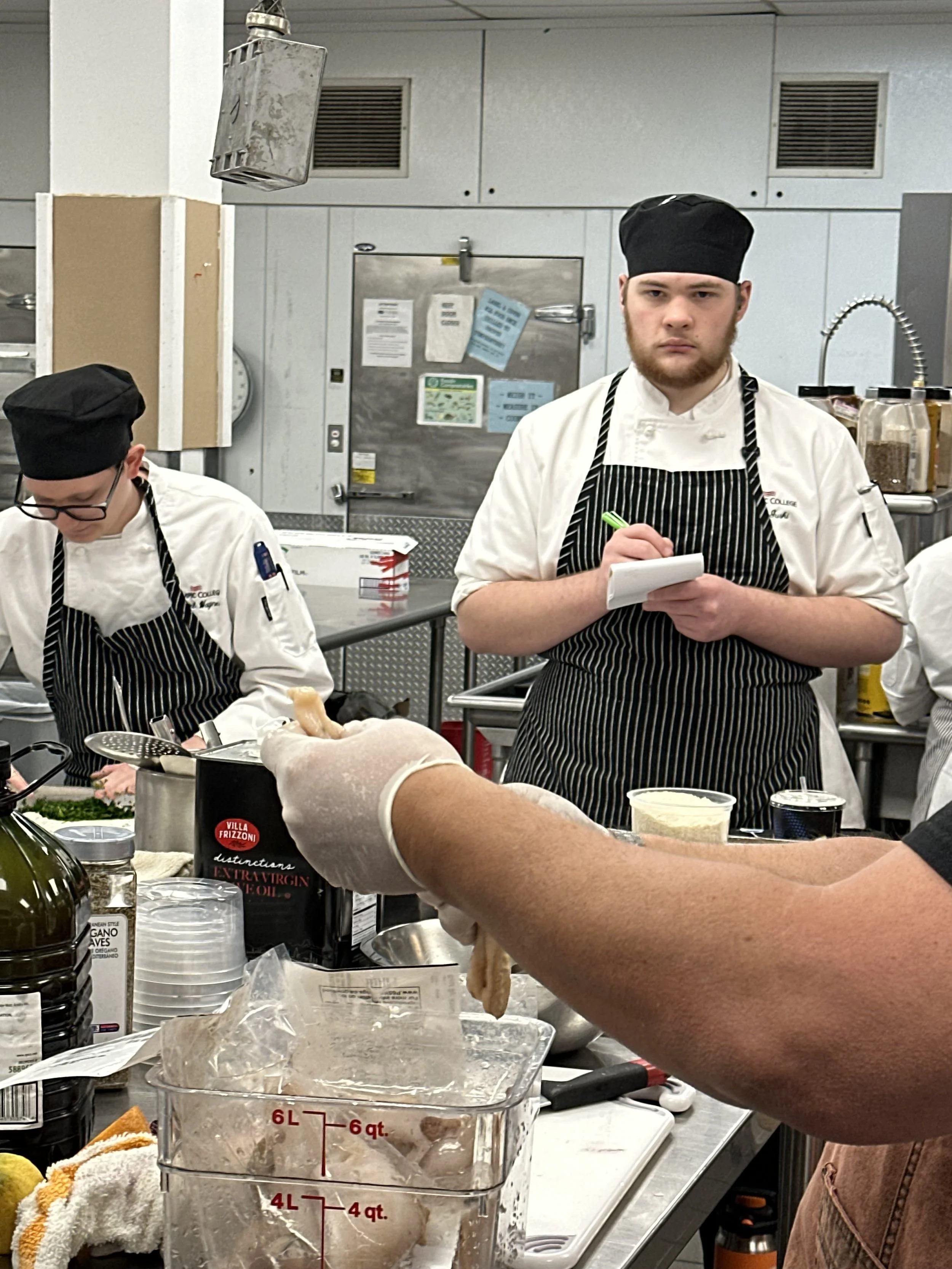
Taking notes on the preparation while building stewardship mentally.
Merroir as a Tool for Stewardship
This is where the culinary classroom goes beyond simply teaching students how to cook seafood. I teach merroir as a tool for understanding marine stewardship.
If students learn that an oyster, clam, mussel, or geoduck is shaped in part by its environment, they begin to understand that the health of that environment matters. Clean water, functioning estuaries, healthy tidelands, and responsible aquaculture are not abstract environmental concepts—they are connected directly to the ingredients chefs put on the plate.
A chef does not have to be a marine biologist to understand that the quality of the food depends upon the quality of the environment in which it is produced. Teaching students to recognize merroir gives me a way to introduce that idea through something they already care about: flavor. Taste becomes the starting point for a larger conversation.
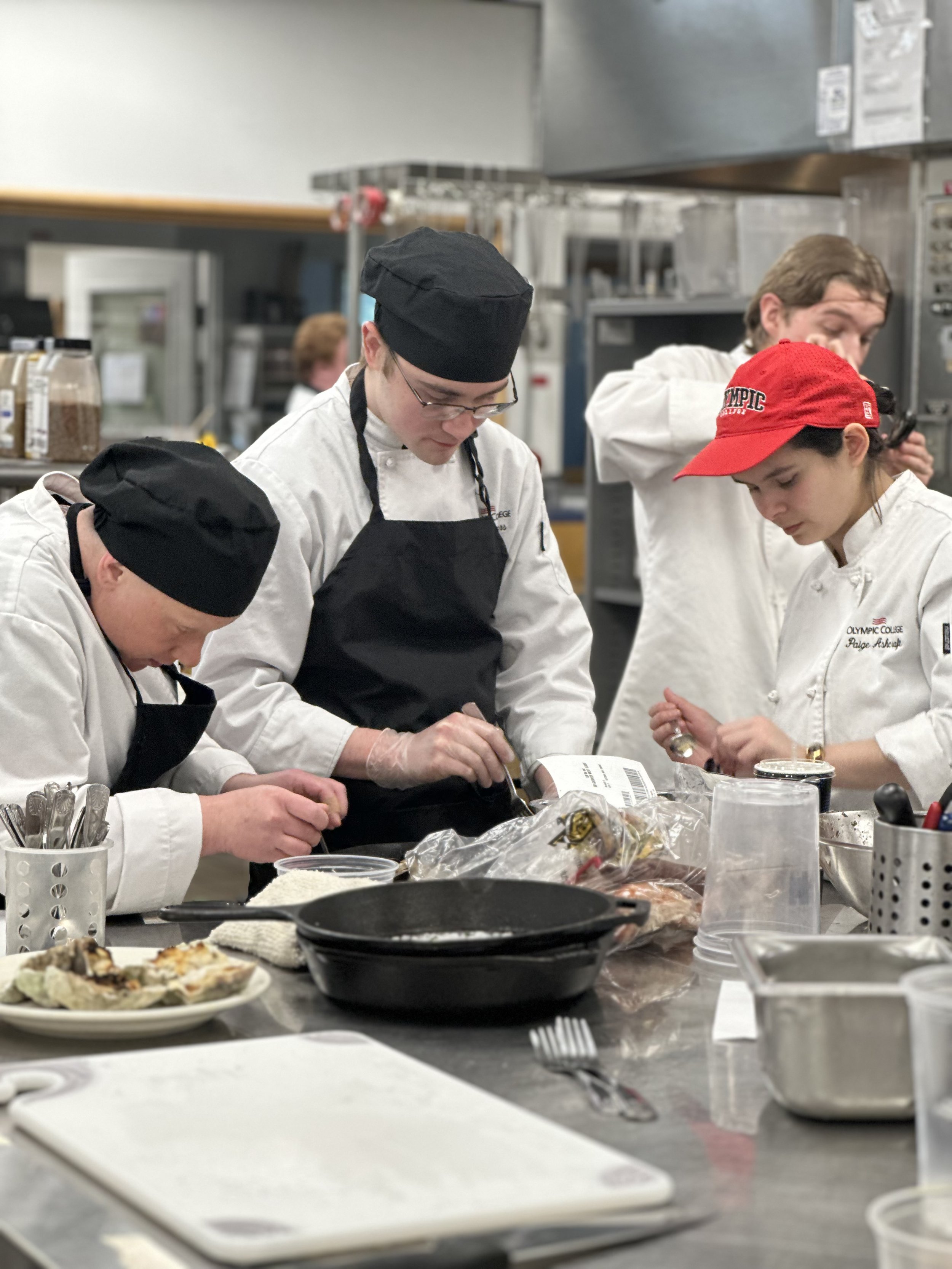
Focused for sure!
From the Classroom to the Restaurant
For community college culinary programs, there is a practical reason to teach these concepts: preparing students for employment. That means teaching restaurant fundamentals like knife skills, sanitation, organization, timing, heat management, and consistency. But it also means exposing them to whole ingredients they will encounter in professional kitchens.
Some students enter the classroom having eaten clams or mussels but never having handled or cooked a live one. I have seen that initial hesitation disappear quickly once they learn the basic process: inspect the shellfish, discard damaged specimens, clean the shells, debeard mussels, and cook them properly.
A student who takes a living ingredient, handles it safely, cooks it successfully, uses its natural liquor to create a sauce, and presents the finished dish has accomplished considerably more than simply following a recipe. The student has learned how to transform a whole ingredient into a restaurant-ready plate.
There is also an economic lesson here. A relatively simple bivalve preparation can become a genuine center-of-the-plate entrée and a meaningful menu item for a restaurant. Good cooking is not necessarily about expensive ingredients or complicated techniques—it is about understanding the ingredient, applying sound technique, and creating value.
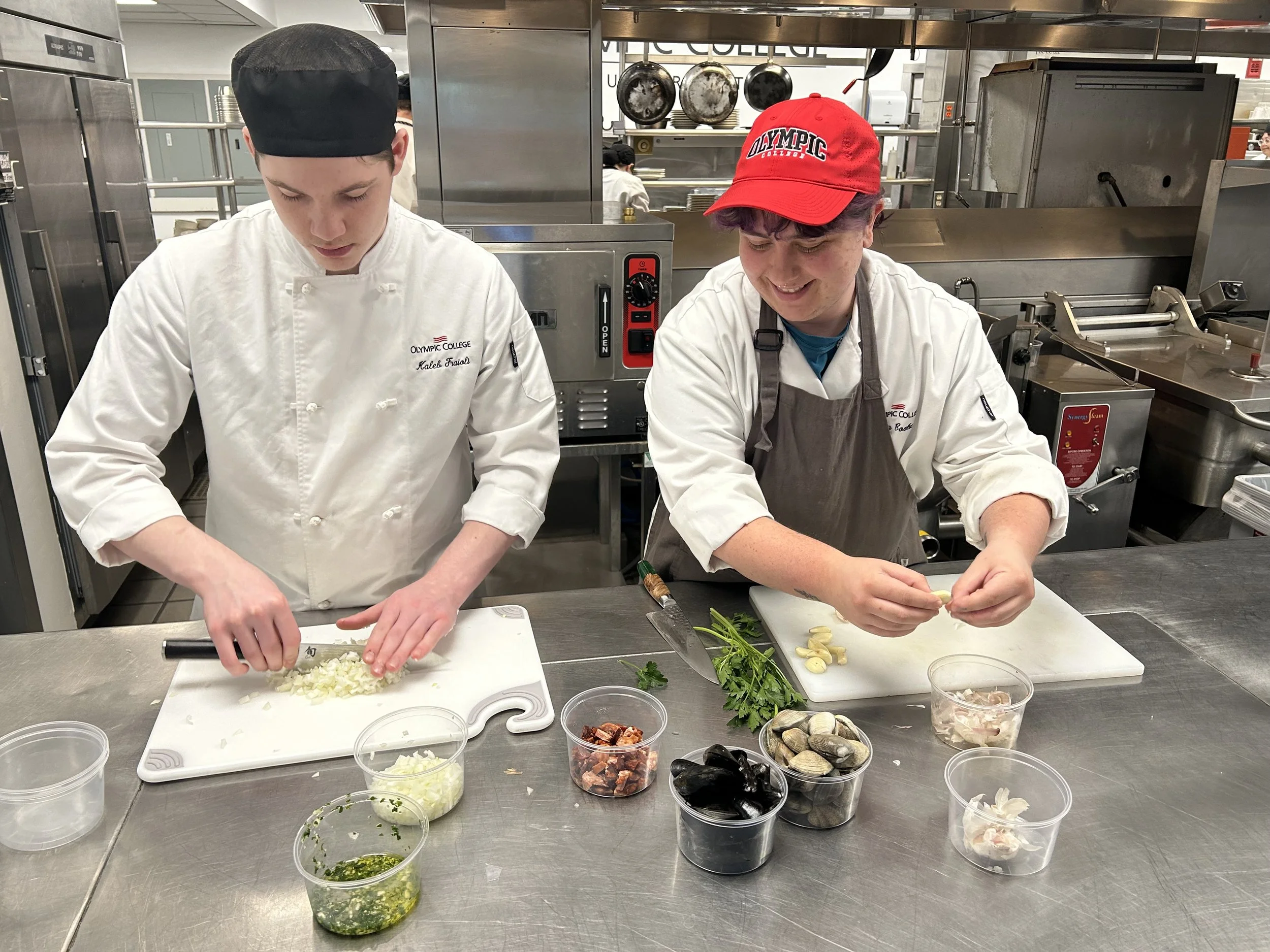
Many student’s take pride in the scope of seafood the PNW provides, and Merroir is the final component that takes the dishes over the top!
Teaching Students to Tell the Story
A chef can use merroir not only to understand an ingredient, but to tell its story. Imagine a server or chef describing a dish as a preparation of Washington-grown Manila clams, explaining that the clams were raised on Puget Sound tidelands and that their natural essence forms the foundation of the sauce. That description does more than identify the ingredient; it gives the diner a sense of place.
The customer becomes part of the tide-to-table process. Taste, texture, and flavor become connected to environmental learning, regional aquaculture, and marine stewardship. Ultimately, merroir is a tool that enhances the entire dining experience. Food tastes better when the diner understands where it came from and why it tastes the way it does. Teaching students how to make that connection prepares them to become better cooks and better communicators.
A Culinary Lesson With a Sense of Place
Teaching the merroir of bivalves connects several vital aspects of culinary education at once. Students learn about regional seafood, practice fundamental techniques, build sauces from natural liquor, and understand how food connects a diner to the environment.
Most importantly, merroir encourages students to pay attention. Rather than seeing a clam or mussel simply as another item on a recipe sheet, students begin to ask where it came from, how it was raised or harvested, what makes it unique, and how a cook can highlight those differences.
A strong culinary education teaches students not only how to cook, but how to taste, observe, adapt, communicate, and make informed decisions about ingredients. Bivalves provide an unusually effective vehicle for that education because the connection between the living animal, its environment, and the finished dish can be experienced directly.
Teaching merroir is not simply teaching students about seafood. It is teaching them how to understand an ingredient, communicate its story, and let that understanding guide the way they cook. For me, that is the real value of teaching bivalve merroir in the culinary classroom: recognizing that every ingredient comes from somewhere, and that understanding where it comes from makes us better cooks, better professionals, and better stewards of the food system.
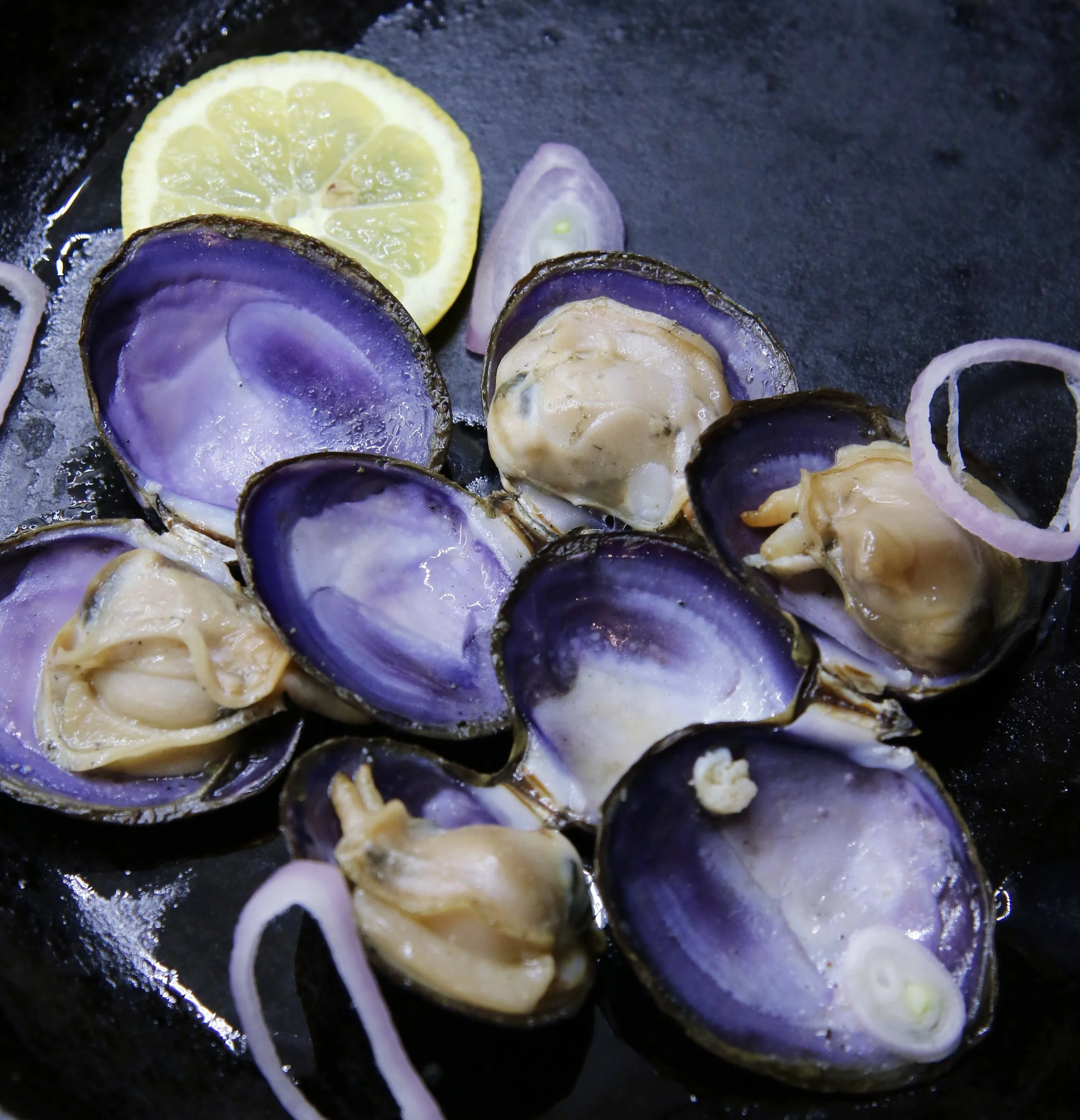
The beauty of Varnish clams are always a show-stopper!