Korean Rockefeller
Rethinking the "Center of the Plate" One Shell at a Time
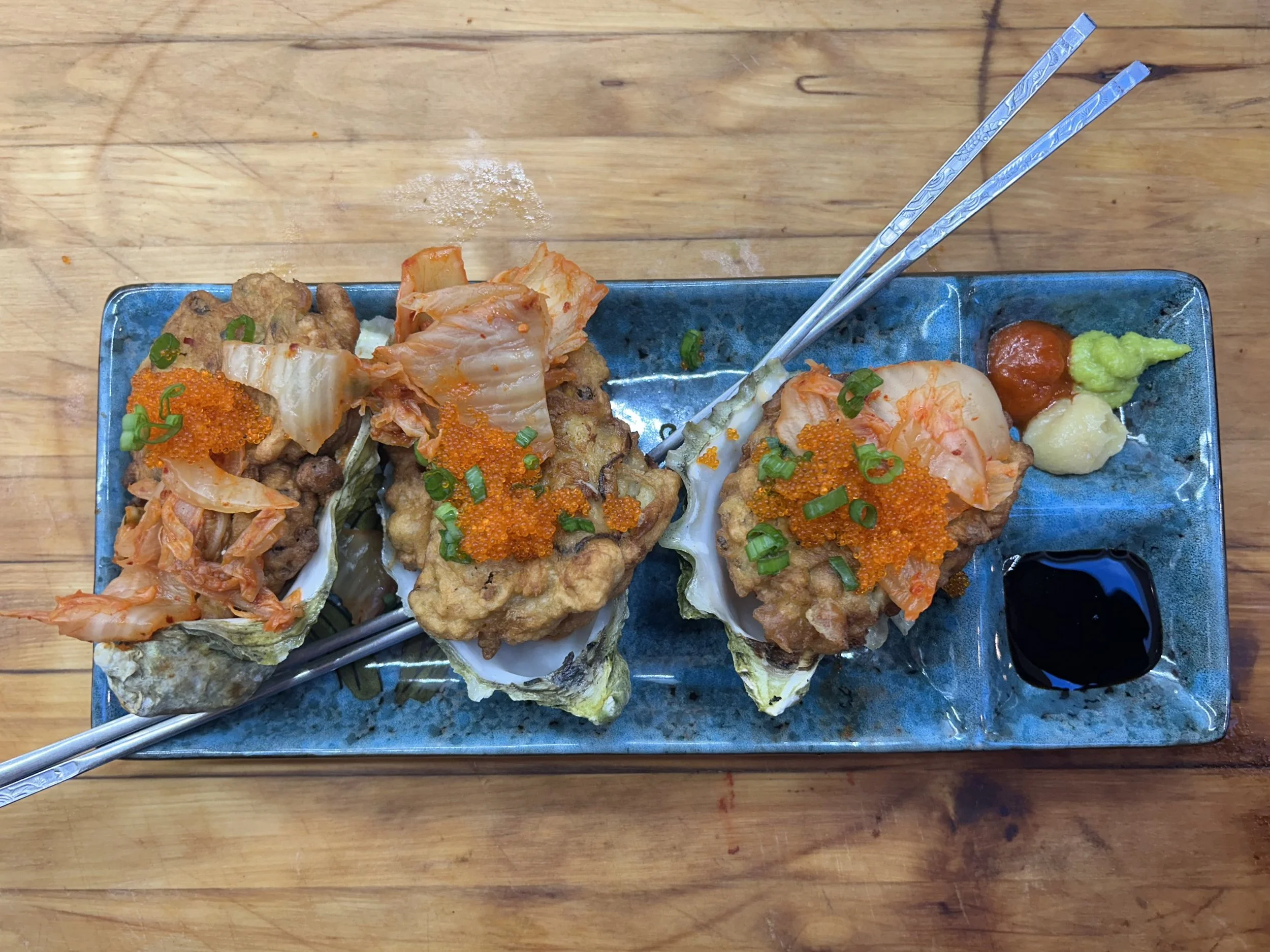
Korean Rockefeller Recipe, Article, and Photo By Mark Tagal
While oysters have been consumed in the United States for hundreds of years, modern American dining rarely treats them as a true center-of-the-plate dish. More often, they appear as an appetizer, a starter, or the star of a raw bar. They can certainly be the centerpiece of a lunchtime sandwich in coastal cities and towns across the country, but because oysters are a relatively small protein, they often escape the true center-of-the-plate status
So why not make them the center of a collection of smaller plates?
For many people, oysters are already a vehicle for condiments and hot sauces. A squeeze of citrus, your favorite hot sauce, or a wonderfully simple mignonette can make a raw oyster endlessly customizable. Once you start cooking them, the possibilities only multiply: tartar sauce, cocktail sauce, rémoulade, barbecue sauce—the list of potential accompaniments goes on and on.
This is where the Korean tradition of banchan becomes particularly interesting.
Walk into any Korean restaurant, and you are immediately greeted by the concept of banchan. These side dishes might be presented from a salad-bar-style selection or arranged at the table as a series of small plates accompanying the rice and main protein. Made up of kimchi, cooked and raw vegetables, seaweeds, fermented specialties, and relative newcomers like mashed potatoes, buttered corn, or macaroni salad, banchan provides contrast, variety, texture, and flavor throughout the meal.
That got us thinking: what if oysters could work the same way?
Introducing Korean Rockefeller.
Recently, while discussing the concept of Merroir with a group of high school students, we explored the factors that influence the taste, texture, and shape of oysters. Understanding how different growing conditions can produce radically different shell types—and how those characteristics influence the way an oyster is ultimately served—can make eating one a far more meaningful experience.
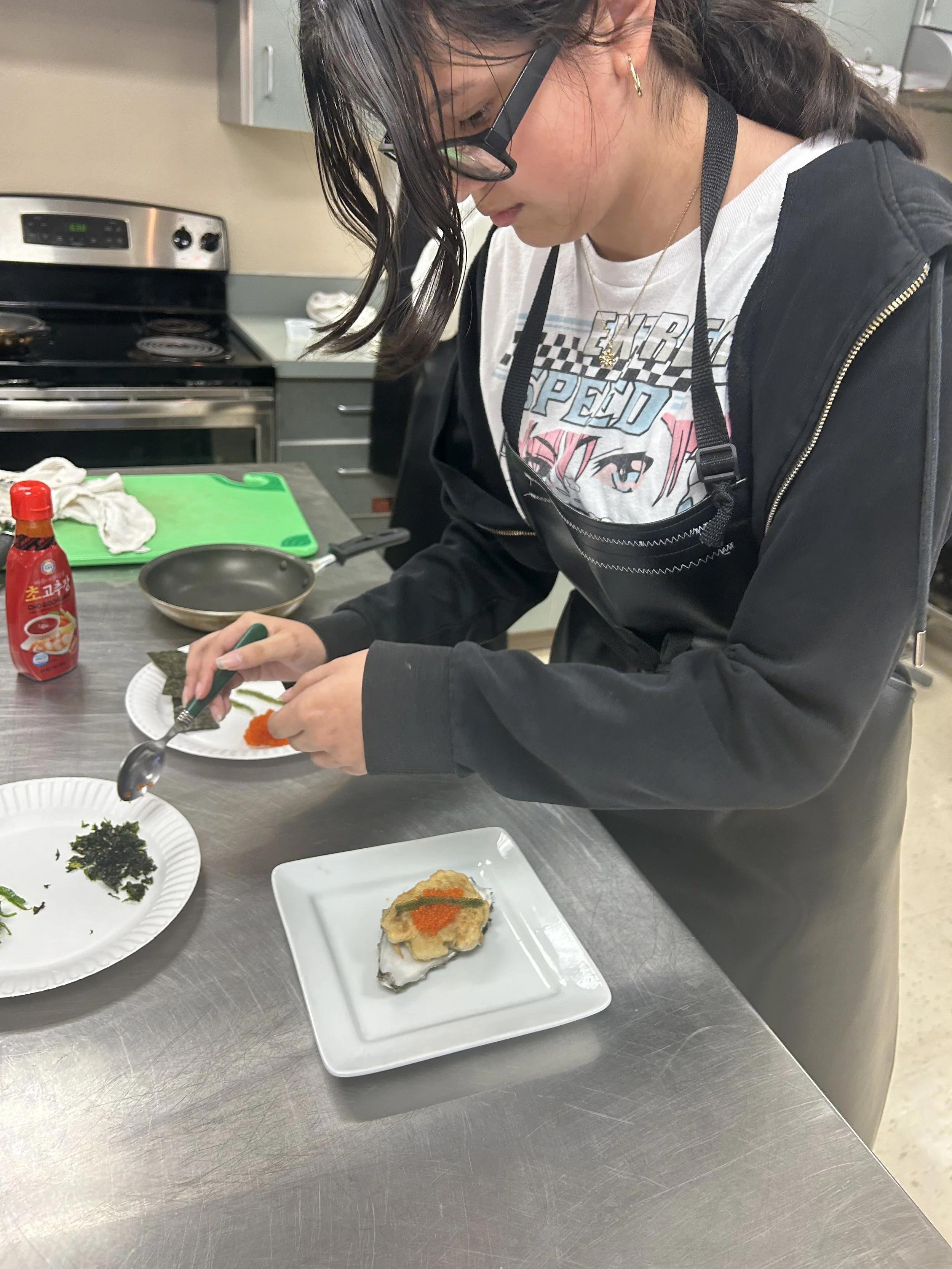
Bonney Lake High School culinary student creating their own twist on Oysters Rockefeller. Photo by Lisa Tagal
How an oyster is grown has a dramatic influence on the shape of its shell. The recent explosion of oysters on the half shell has led many growers to adopt methods specifically designed to produce deeply cupped, single-shell oysters. The goal is often a perfectly shaped, deep-cupped oyster: a shell that is not only attractive, but also functional. When the end goal is a half-shell product destined to be slurped up, the shape of the shell can be just as important as the taste of the oyster.
But what about all those oysters that don't sell? What about the oysters that grow just a little too large for the average raw-bar enthusiast, or those that don't develop the ideal shape for a half-shell presentation? What cooked oyster dishes might actually benefit from—or even require—a beautiful shell?
Wanting to try something besides a straight raw oyster, we used Oysters Rockefeller as a launching point for a dish of our own. We settled on the name Korean Rockefeller, largely because we were expanding on the concept of a Korean seafood pancake. Instead of making one large pancake incorporating a multitude of seafoods, we individually battered and dipped oysters in a Korean-style seafood batter, fried them up, and returned each one to its shell.
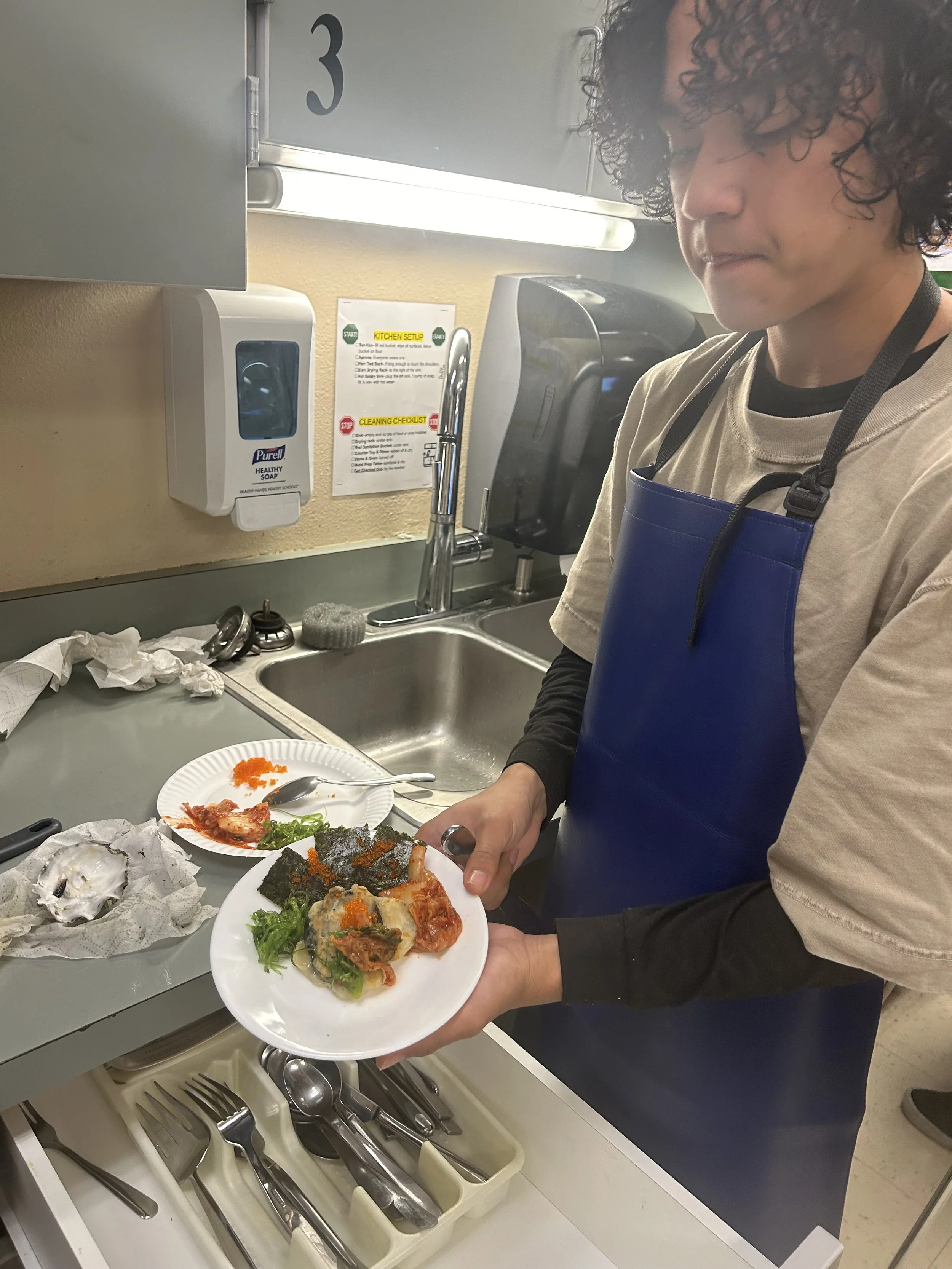
Bonney Lake High School culinary student’s reimagining of Oysters Rockefeller as Korean Rockefeller. Photo by Lisa Tagal
Instead of the cream, spinach, breadcrumbs, and Parmesan cheese ubiquitous in American Rockefeller, we replaced those heavy toppings with something much more interactive. We let the students customize their own oysters using a multitude of banchan options—including fish, eggs, dried and fermented ingredients, seaweeds, a variety of vegetables, and, of course, kimchi.
What resulted was an endlessly customizable, totally personalized, highly interactive, yet extremely simple oyster dish. Every oyster could be different. One might be crisp and spicy, another rich or briny. The diners became part of the dish, reaching for another oyster and then another condiment, experimenting with combinations and discovering what worked for them.
Much like the concept of Merroir enhances the dining experience by bringing diners closer to where their seafood comes from, Korean Rockefeller takes that connection a step further. The diner isn't simply eating the oyster; they are actively participating in determining what that oyster ultimately becomes.
Instead of simply putting an oyster in the center of the plate, we gave the diner an entire oyster experience to build—one small shell at a time.
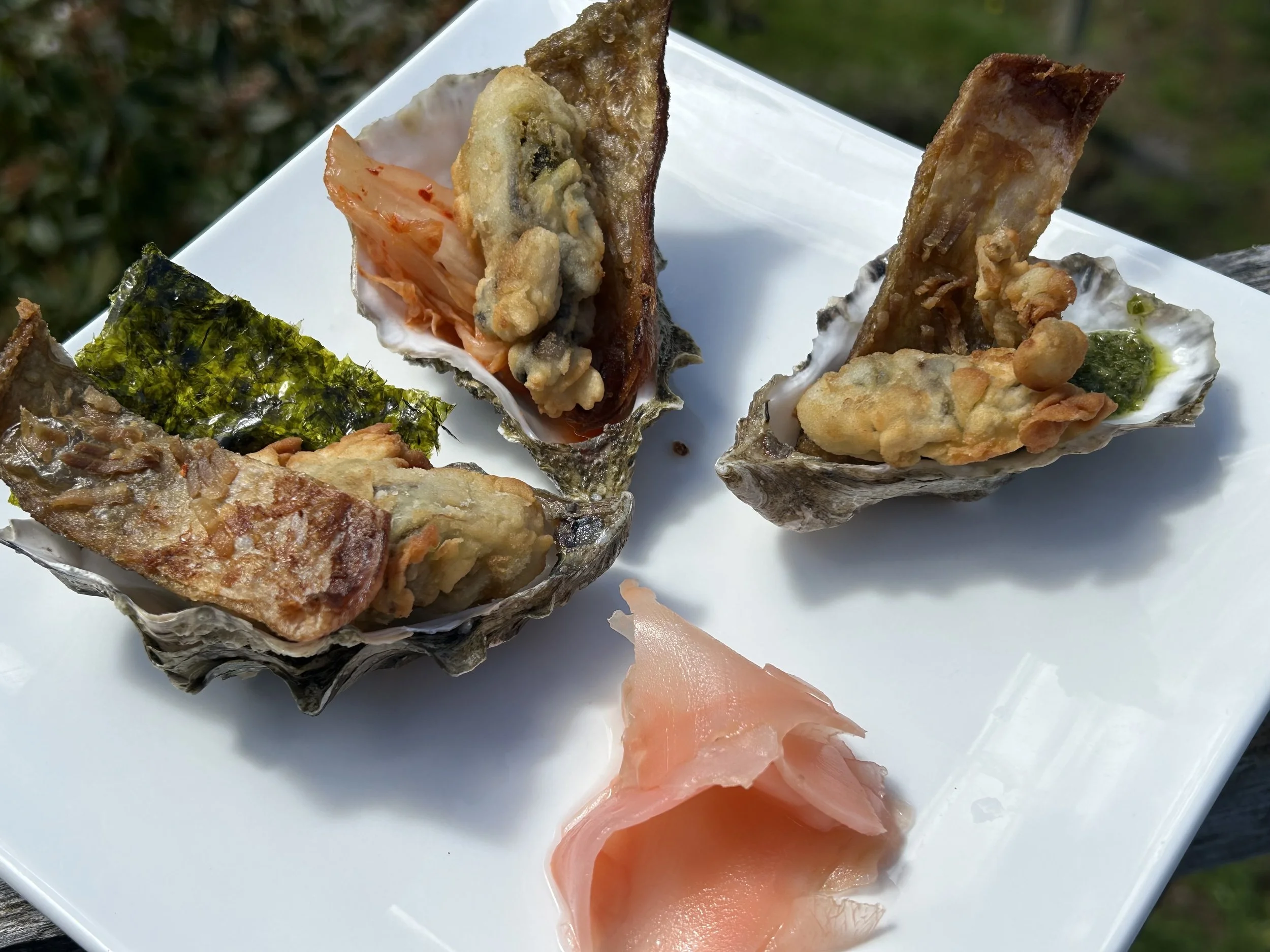
Korean Rockefeller’s only limit is your creativity. Photo and recipe by Mark Tagal