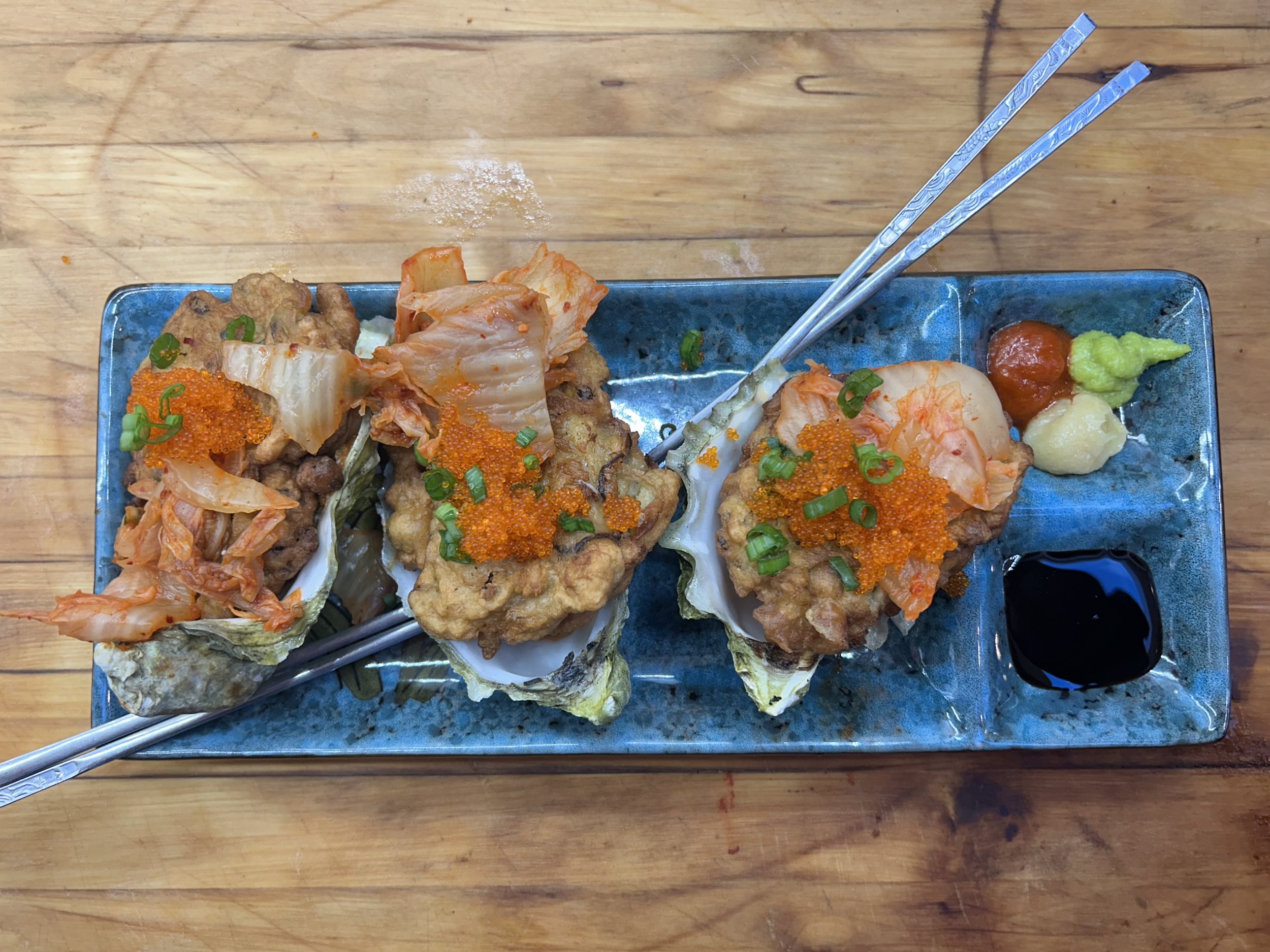
Korean Rockefeller
While oysters are rarely treated as the center of the plate, what happens when you make them the center of a whole spread of small plates? Introducing Korean Rockefeller—a new take on a classic that pairs crispy, Korean-battered oysters with the vibrant, customizable world of banchan. Explore how merging shellfish education with interactive dining gives guests complete freedom over every single shell.
The Merroir of Port Gamble
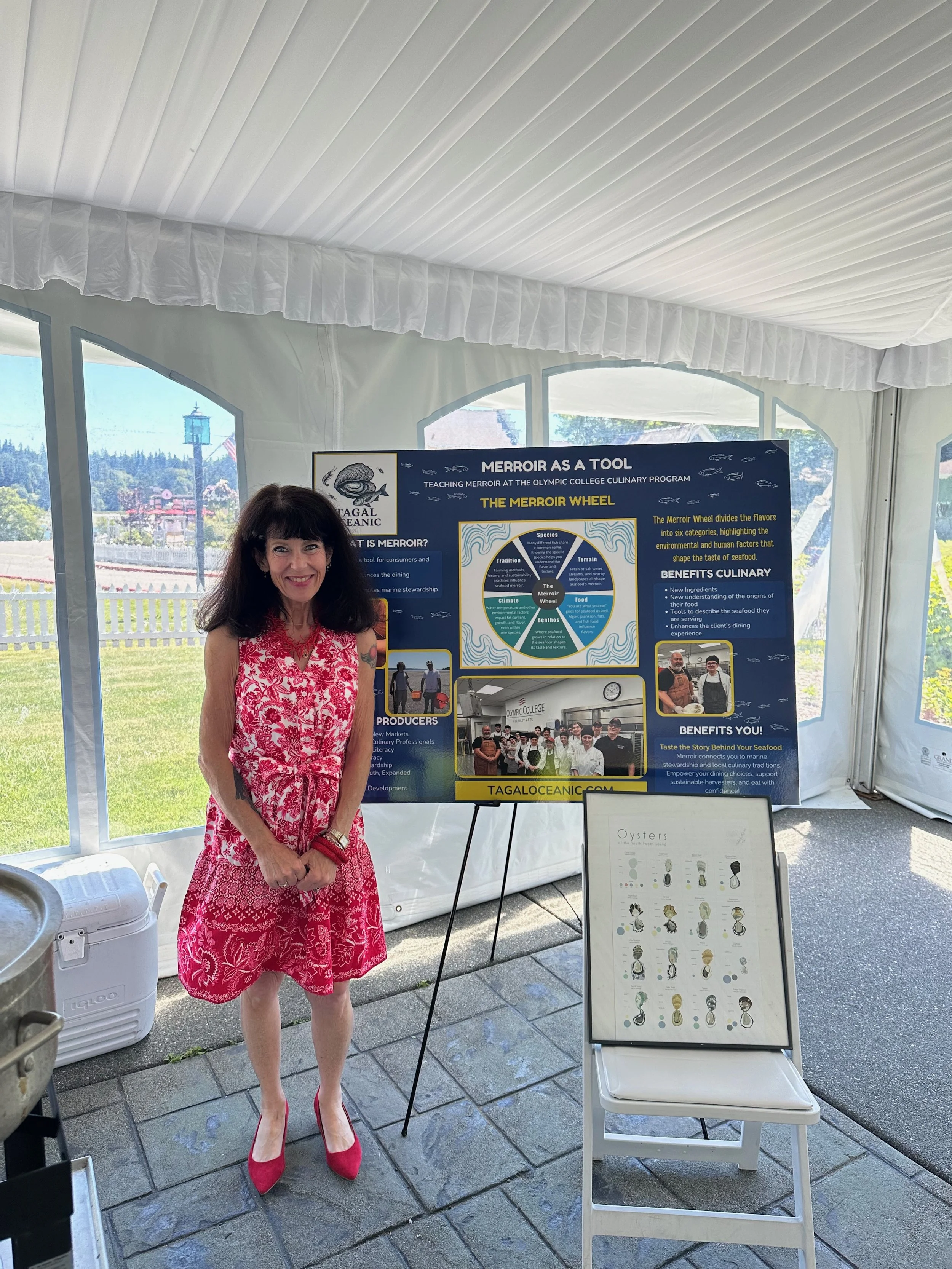
The Merroir of Port Gamble
Sunday, June 14th marked the inaugural Port Gamble Science Consortium event, held in the scenic historic town of Port Gamble. Tagal Oceanic was proud to present a brief talk on merroir, the unique combination of place, water, ecology, and culture that shapes the flavor of local seafood. Following the discussion, we put theory into practice with an interactive shellfish tasting.
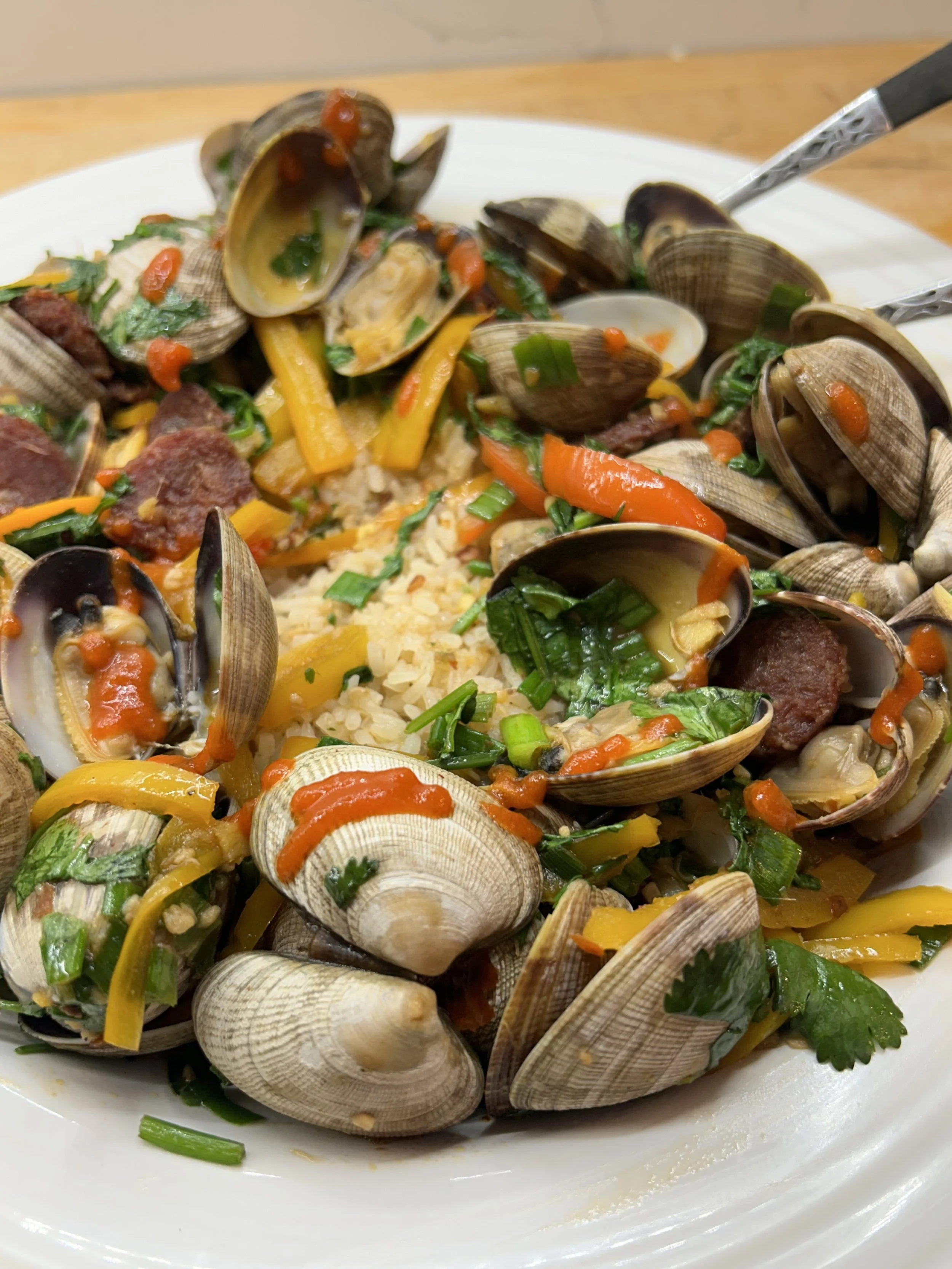
The menu featured two distinct varieties of Pacific oysters alongside several preparations of Manila clams. First up were the oysters: the Port Madison Petite and the Quinty Point. Though both belong to the same species, their distinct cultivation methods and growing environments created a dramatic, delightful contrast on the palate.
The Port Madison Petite is grown on Bainbridge Island, just around the corner from Agate Pass. This dynamic shoreline experiences powerful tidal shifts and strong water movement. Raised in bottom bags, these oysters are routinely tumbled by a dedicated workforce of volunteer CSA members. As a pilot farm for the Puget Sound Restoration Fund, the Port Madison Community Shellfish Farm serves as both a source of exceptional seafood and a living classroom for marine stewardship. Upon shucking, the oyster greets the palate with an immediate sweetness followed by a moderate brine. Its deep cup provides a satisfying mouthfeel, while the firm, snappy texture gives way to lingering, fruity notes.
By contrast, the Quinty Point oyster offers an entirely different experience. Cultivated in Discovery Bay, these oysters thrive in nutrient-rich waters shaped by local watershed inputs and the salty exchange of the nearby Strait of Juan de Fuca. The first bite floods the palate with a deep, cold, oceanic brine, followed by subtle ripples of fruity umami. As the salinity fades, a delicate sweetness emerges, reminiscent of lemon cucumber or the crisp white flesh near a watermelon rind. Yet, its defining character remains unmistakably that of the sea. One taster captured it perfectly, describing the intense brine as “the taste you experience when you're caught under a wave while surfing.”
When it came to the clams, our original intent was to explore how different species, specifically the Manila clam and the Salish Blue Varnish clam, translate the same environment into distinct flavors. Harvested from the exact same tide flat, their terrain, benthos, and diets were identical, providing a perfect control group to isolate genetic nuances in flavor. However, a sudden reminder of the ocean's volatile nature forced an immediate change of plans. At 9:00 PM, the night before the event, a toxic algae bloom triggered a paralytic shellfish poisoning (PSP) closure across the Hood Canal. Pivoting quickly to prioritize seafood safety, we sourced Manila clams from a different part of the Salish Sea that remained open and safe for harvest.
Despite the last-minute logistical hurdles, the inaugural Port Gamble Science Consortium event proved to be a resounding success, bringing the abstract concept of merroir to life on the plate and setting a wonderful precedent for future consortium gatherings. Ultimately, this evening of tasting underscored a profound ecological truth: to truly understand a sense of place in the ocean, one must deeply respect its rhythms and its limits. While ecology dictates flavor, environment dictates availability. By embracing the unexpected shift from a two-species comparison to a single-species, multi-preparation showcase, the event beautifully demonstrated the incredible versatility of local shellfish. It served as a delicious, memorable reminder that working with the sea requires equal parts admiration, adaptability, and an unwavering commitment to marine stewardship and safety.