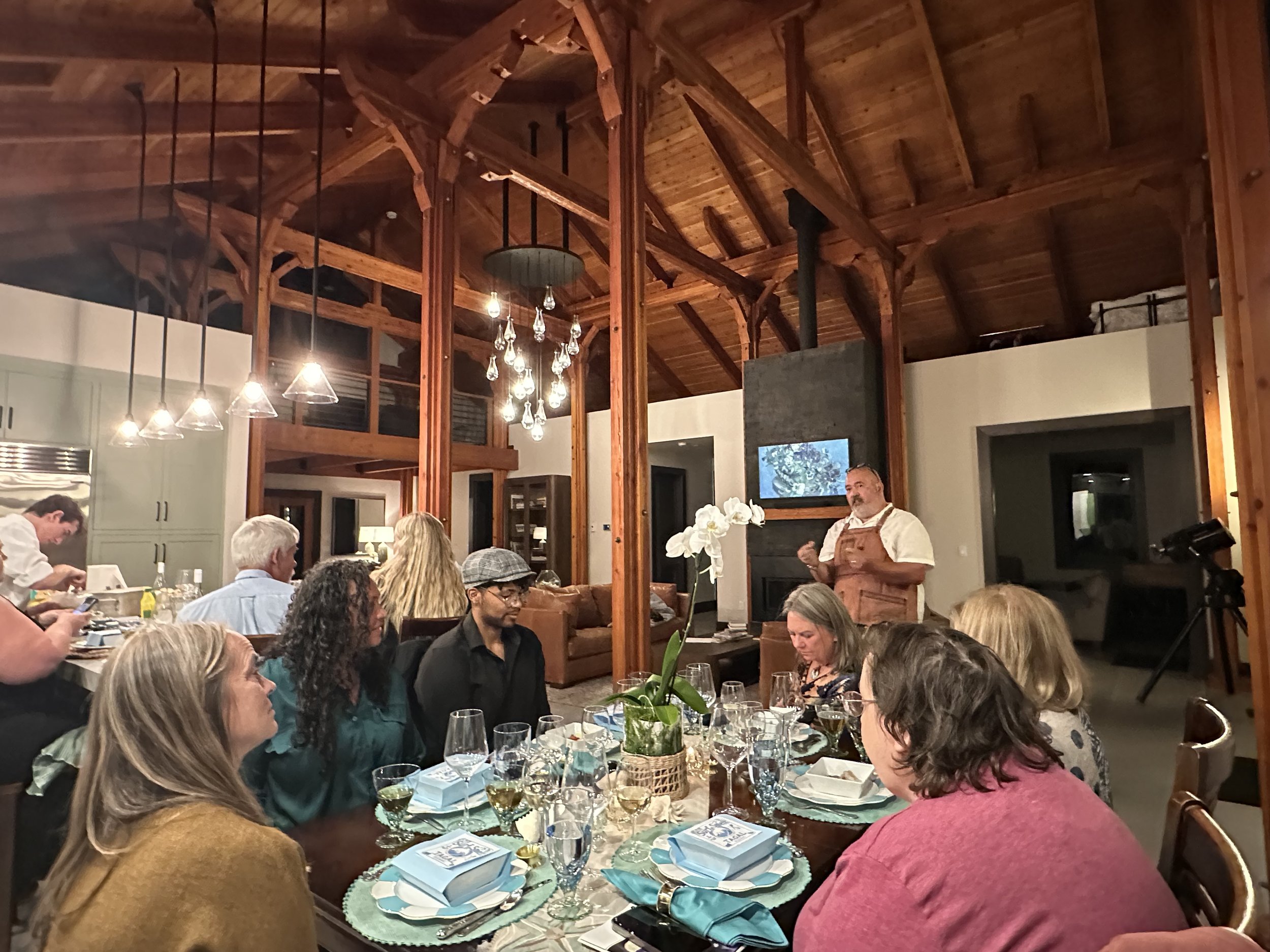
Tagal Oceanic’s Chef/Aquaculturist Mark Tagal is sharing information about each plate of seafood and how the Merroir of its environment has created this perfect, fresh, delicious meal.
A Follow-Up to the Merroir-Themed Orca Fundraiser Dinner
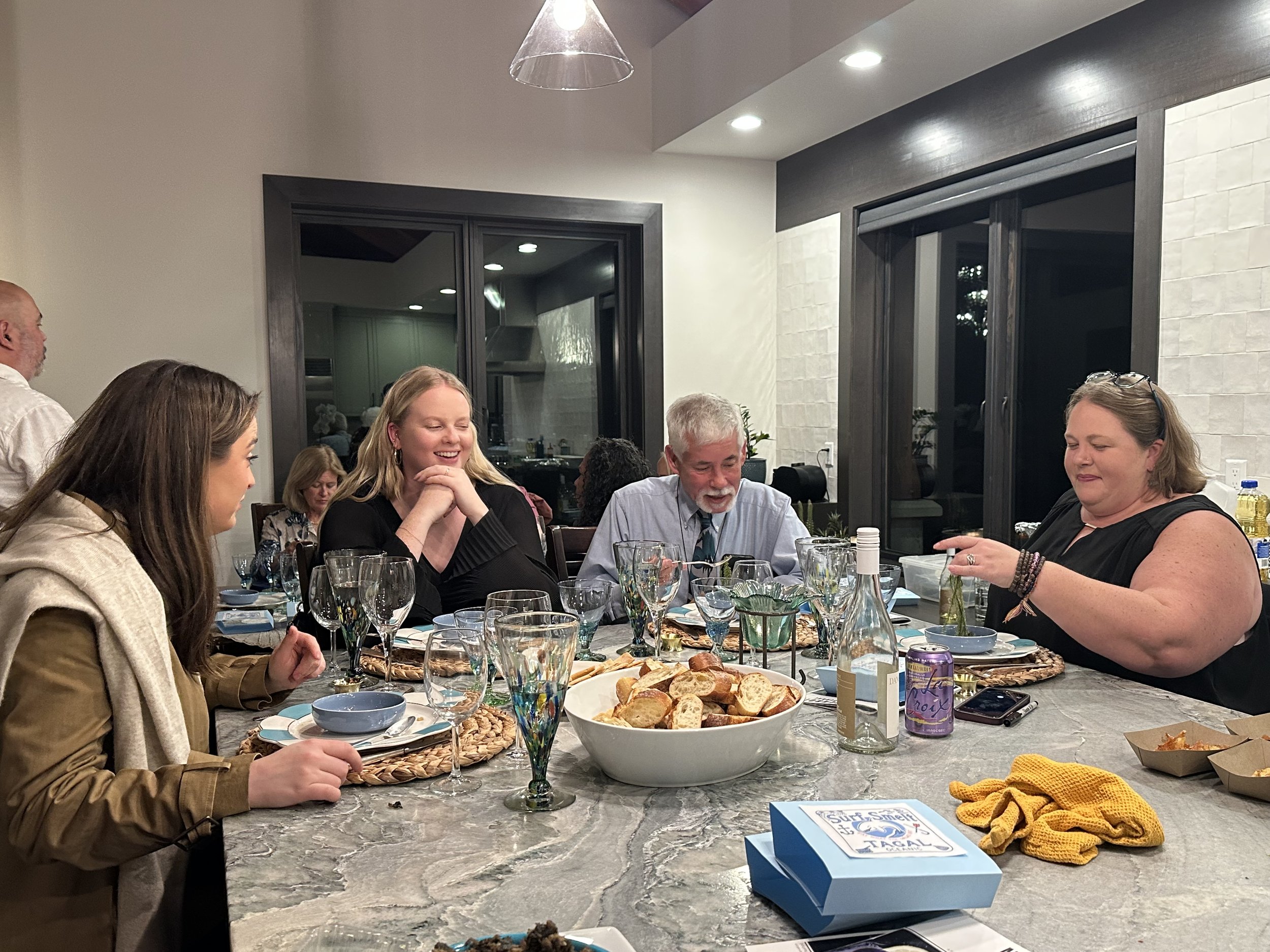
First, a little about the guests. The dinner was a fundraiser for the Langley Whale Center and the Orca Network. Ten guests paid $350 each to support these organizations and enjoy an eight-course seafood dinner, complete with a merroir explanation of what they were eating. Most of the guests were donors to the Whale Center and supporters of the research, education, and monitoring efforts surrounding our local orcas. Some came from as far away as Puyallup, others from Seattle, and the rest were residents of Whidbey and Camano Islands.
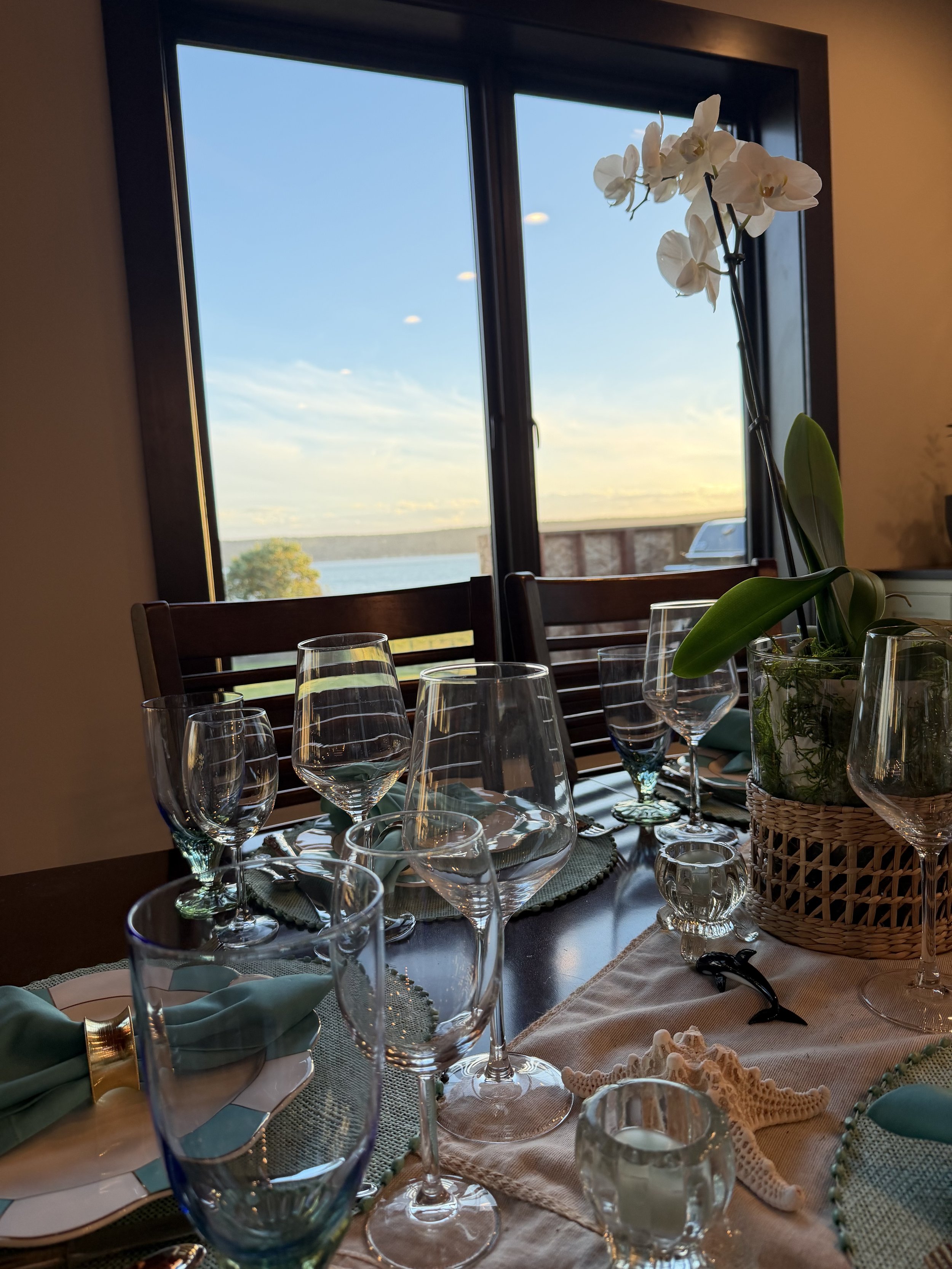
A view across Penn Cove, whose waters provided some of the evening’s delicious mussels—and perhaps, if luck was on our side, a glimpse of passing orcas. Thank you to Orca Network volunteer Barb French for opening her home for this special evening.
The kitchen staff supporting Chef Mark was made up of Chef Kahale Ahina, Culinary Teacher and Coach at Bonney Lake High School, and Wyatt Miller, a student graduate of the Bonney Lake culinary program. The menu featured oysters, surf smelt, shrimp, Penn Cove mussels, sea grapes, Kona kanpachi, and sablefish.
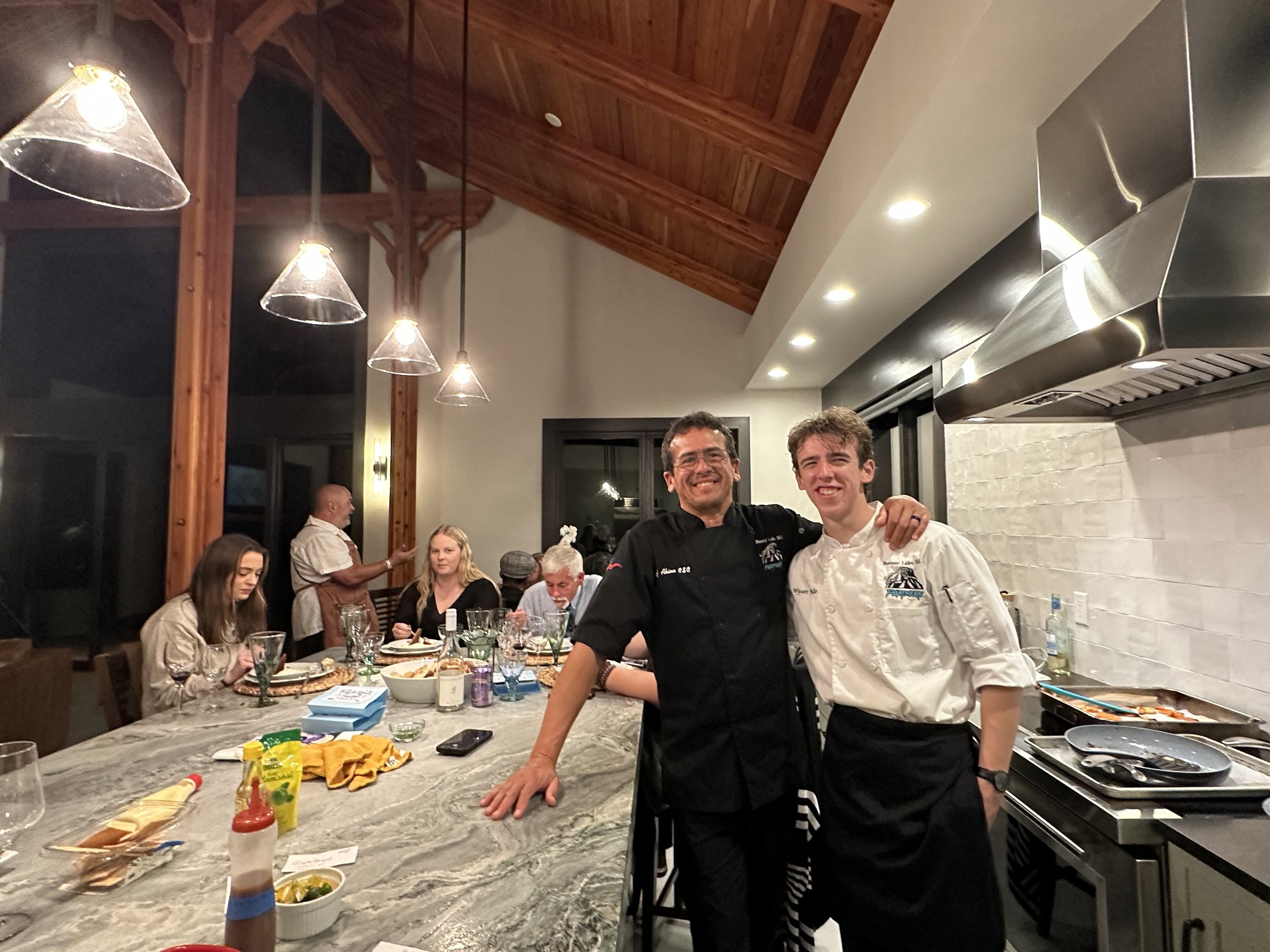
Chef Kahale Ahina and Wyatt Miller were an incredible kitchen crew. All smiles after the final plate was delivered. Tremendous teamwork from start to finish.
The main goal was to raise funds for the Orca Network. A secondary goal was to showcase seafood from around our region and beyond, while educating guests about the concept of merroir: understanding where seafood comes from and how its environment influences its flavor, shape, and texture. The idea was to enhance the dining experience by helping people understand not just what they were eating, but why it tasted the way it did.
Did we convert everyone into seafood eaters who would eat seafood twice a week, with half of it being aquaculture-raised? Of course not. But we did accomplish some things worth talking about. Let's go through them in the same order as the dishes.
The Bonus Courses: Because Eight Wasn't Enough
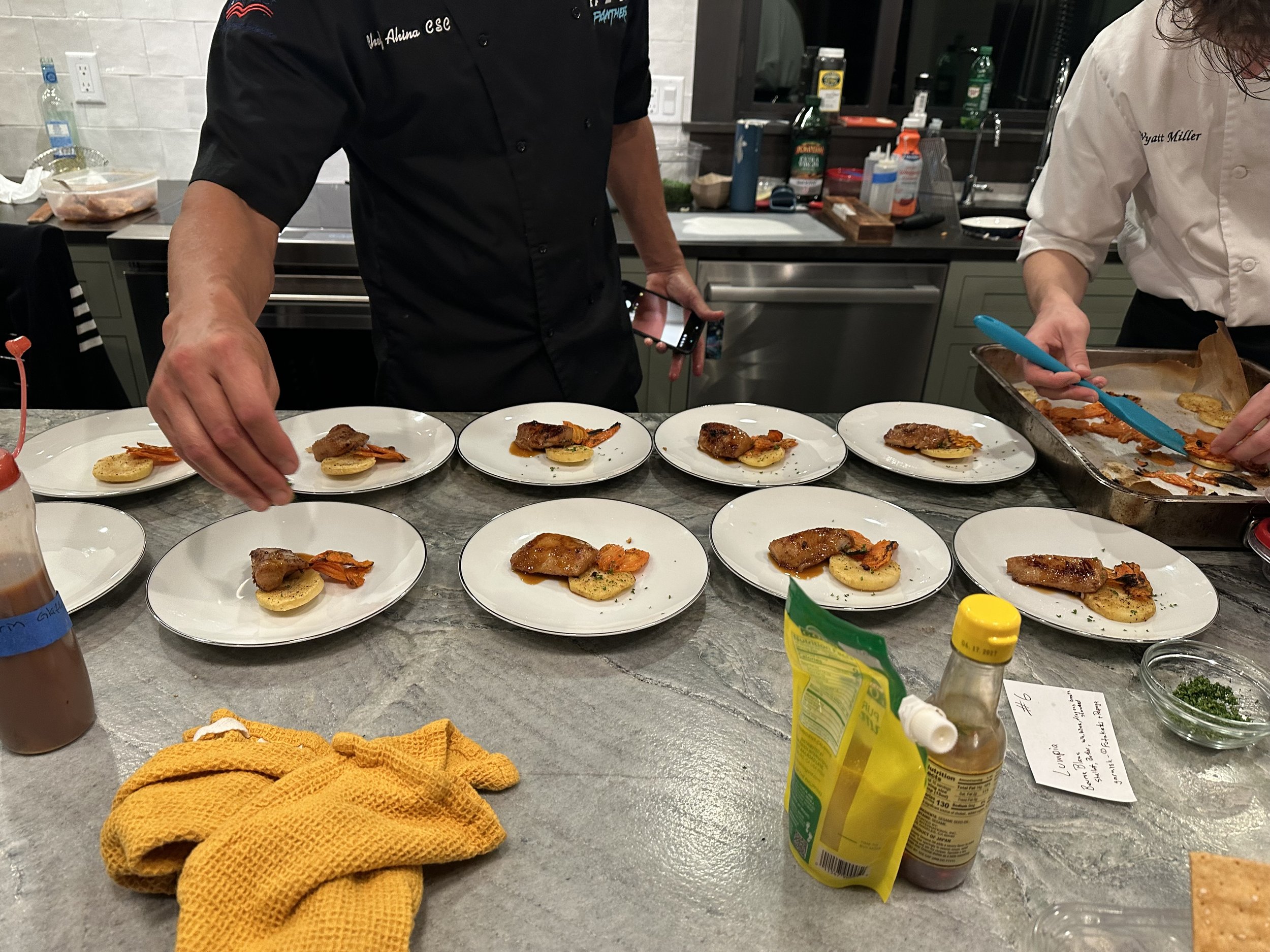
Every detail was considered, from the seafood to the carefully chosen tableware.
I decided eight courses weren't going to cut it, so we added two surprise appetizers.
The first was a smoked Kona kanpachi cream cheese spread served with bagel crisps. We used meat from the belly and collar, along with meat scraped from the fish frames. The second appetizer used meat and skin scraped from the sablefish frame after smoking, making use of parts that might otherwise have gone to waste.
We built the second appetizer as a Korean-inspired sushi taco bar. Guests could add as much or as little as they wanted of the smoked sablefish, kimchi, spicy mayonnaise, and sesame seeds. One of our younger guests described it as a total savory bomb.
It was a fun way to show that seafood doesn't have to be complicated or intimidating. Sometimes, giving people the opportunity to build their own bite is all it takes.
Course 1: Oysters from Three Farms
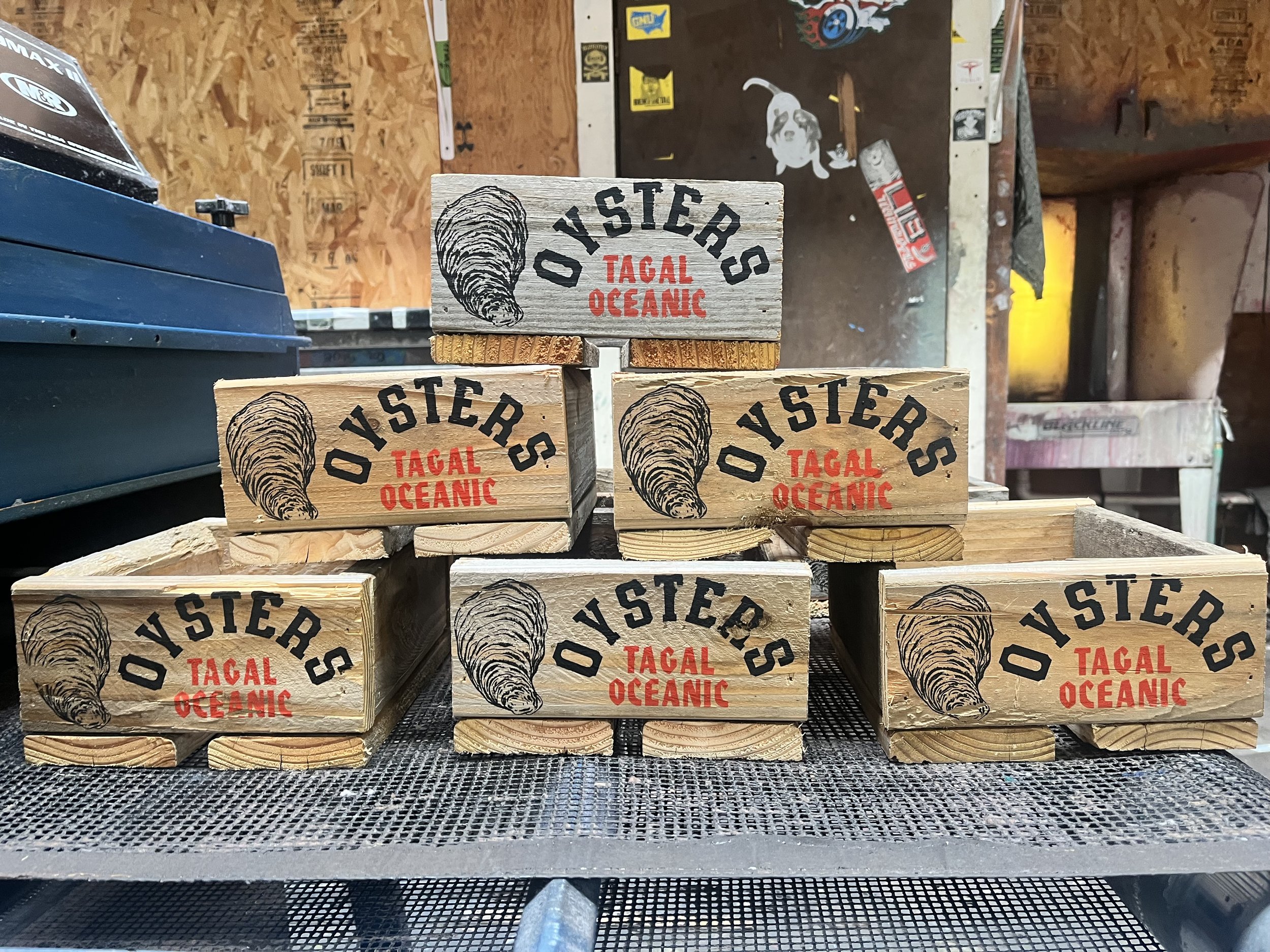
Custom tableware created and built by Mark and Lisa helped bring each dish to life. These hand-screened crates printed by Stonefly Designs served as the vessels for the evening’s oysters.
We started with oysters from three different farms, kicking off the merroir concept right away. Of the ten guests, two had never eaten a raw oyster. By the end of the night, only one still hadn't.
They learned why the Quinty Point oysters from Johnson and Gunstone Shellfish had a bright, briny flavor, why the Sequim Bay Jades oysters from Jamestown had their own distinctive character and shape, and why the California-grown Kumamoto oysters from Pacific Seafood tasted a little different, with a fruitier flavor. Each oyster reflected the place and conditions in which it was grown.
We even had two guests come into the kitchen after the event and ask us to make good on our promise to teach them how to shuck an oyster. Both were successful, and both got to eat a few extra oysters for their efforts.
Courses 2 and 2.1: Surf Smelt
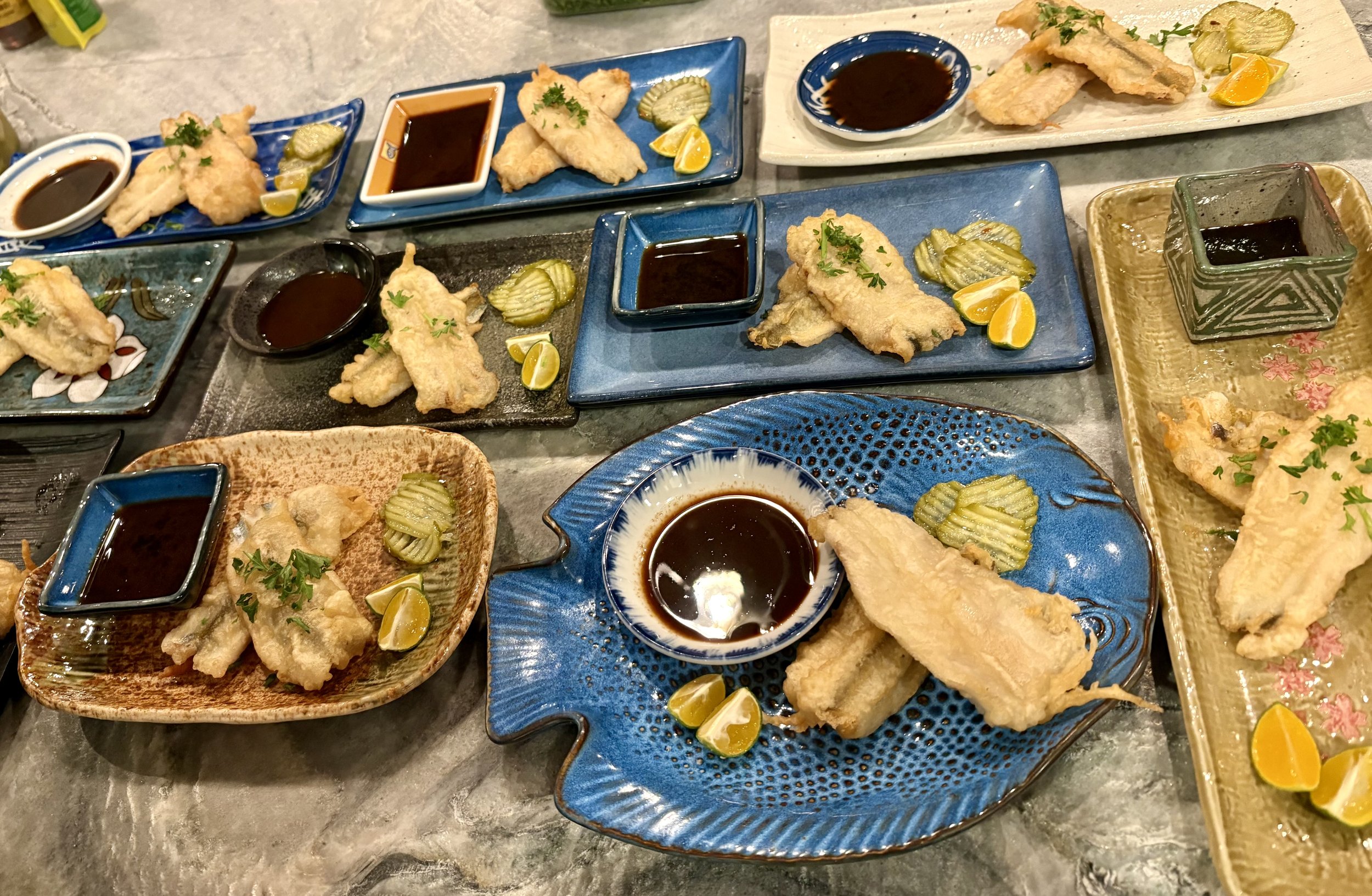
Surf smelt prepared two ways, including this Asian-inspired, delicately tempura-battered preparation that highlights the fish’s delicate flavor and texture.
Not every dish was aquaculture-produced. We wanted to give diners a unique experience, and for this course, we wanted them to eat a fish that orcas might eat. So, we chose surf smelt.
We prepared the smelt in two styles: Mediterranean grilled smelt and Asian-style tempura-battered smelt. Both were small starter courses, but they packed a lot of flavor.
Only one guest had eaten smelt before, and that was Great Lakes smelt. By the end of the night, three guests wanted to come with me to catch more surf smelt or at least find out where they could buy it locally. One guest even declared surf smelt their favorite dish of the entire eight-course meal.
After all, the goal isn't wild-caught fish OR farm-raised fish. The goal is a better understanding of all seafood.
Course 3: Shrimp Toast
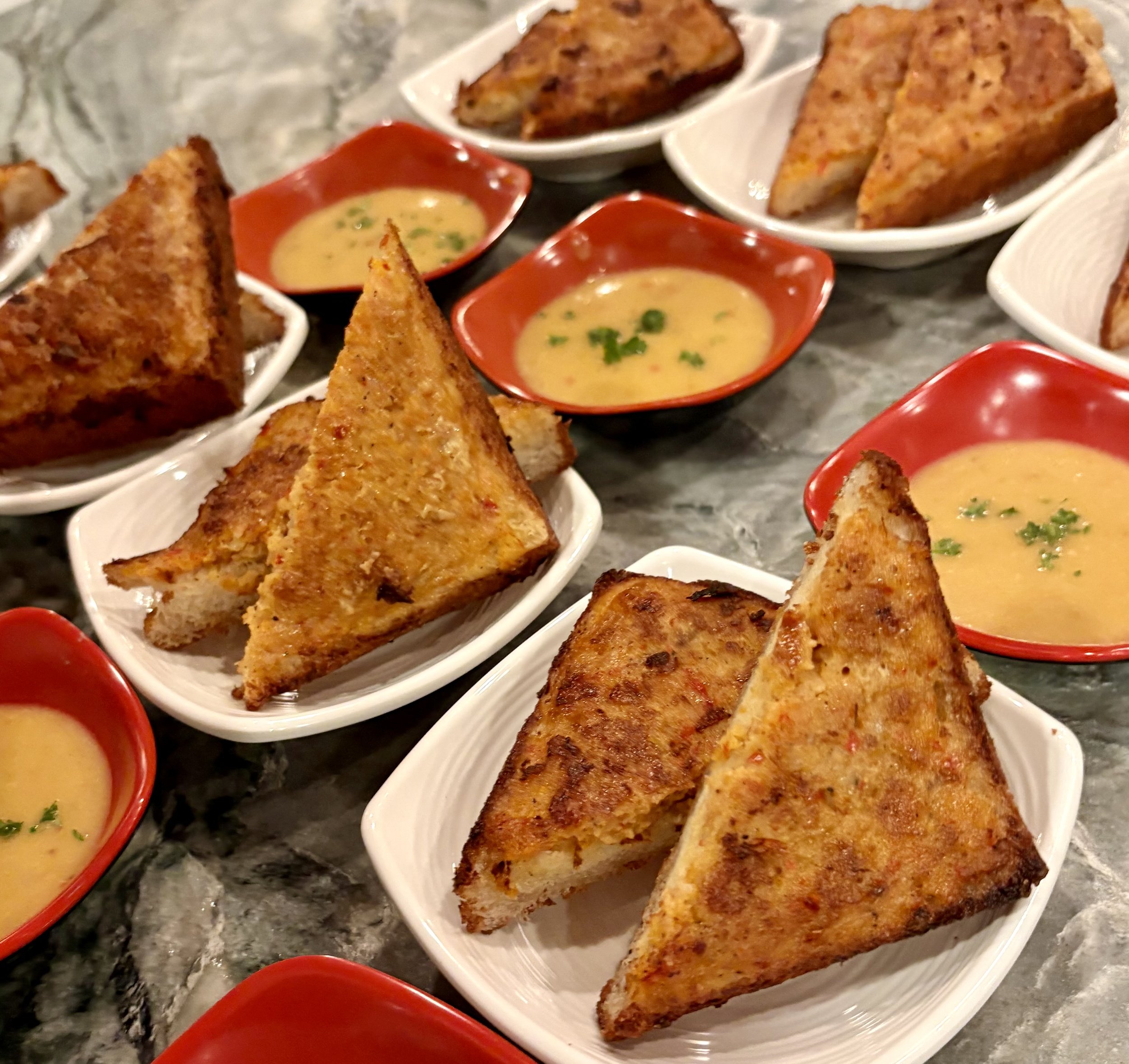
A study in whole-seafood cooking: shrimp toast paired with a silky bisque prepared from the shrimp heads, bringing depth and richness to every bite.
Courses two and three helped us explore the orca food web. We talked about food chains and how fish and crustaceans play important roles not just in an orca's diet, but throughout the entire marine ecosystem.
Everyone had eaten shrimp before, but no one had eaten shrimp quite like this. Guests also came away with a better understanding of the differences between warm-water shrimp and cold-water prawns harvested locally in Puget Sound.
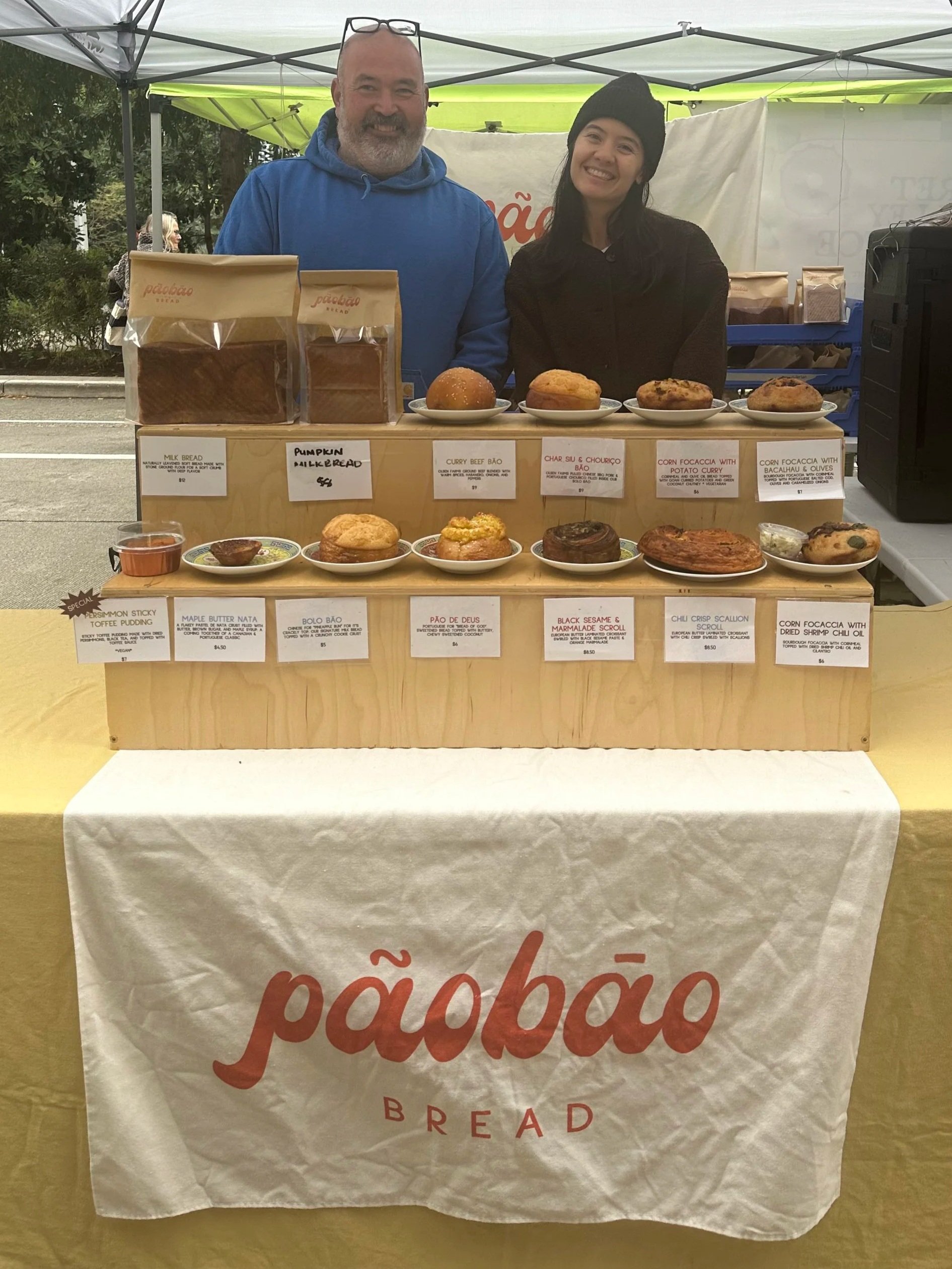
Alison Shiu, baker and founder of PãoBāo Bread, pictured here with Mark, generously donated her famous milk bread for our shrimp toast. Raised in Toronto by her Portuguese mother and Chinese father by way of India, Alison’s baking embodies the Traditions segment of our Merroir Wheel. Her bread carries these deep family roots in every loaf, creating a perfect pairing for the event that connects the terroir of the land to the merroir of our sustainable ocean practices.
Again, we made the point that farm-raised and wild-caught seafood can exist and be enjoyed side by side. It's not one against the other. It's one and the other.
Course 4: Penn Cove Mussels
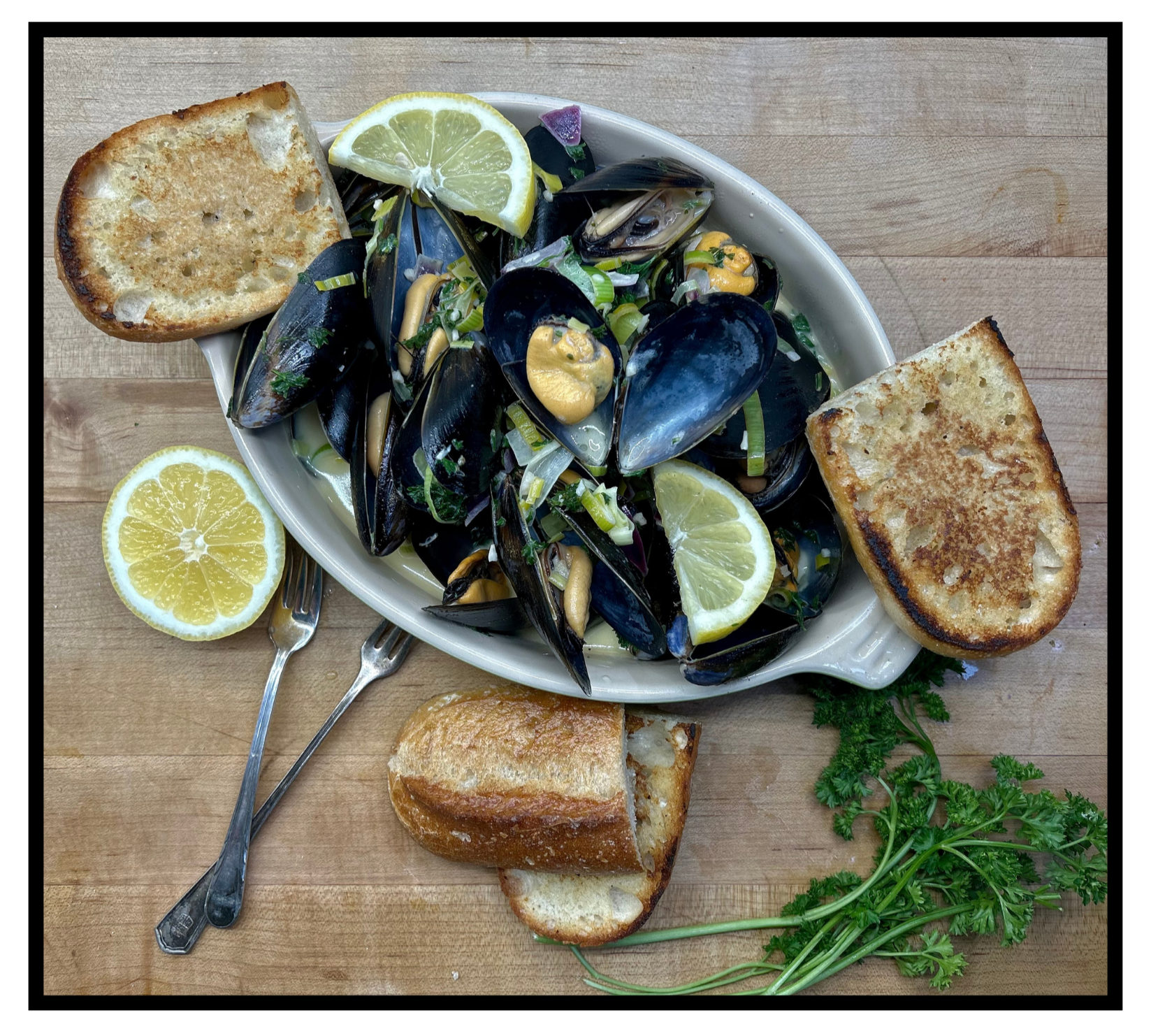
Penn Cove mussels offered a true expression of merroir, bringing the character of their home waters to the table and celebrating the connection between place, people, and seafood.
The event was hosted on the shores of Penn Cove, just across from the Pacific Seafood mussel rafts. All the guests had eaten mussels before, even if they didn't know exactly where they came from. Many of the Whidbey Island residents were already familiar with Penn Cove mussels.
What they came away with was a better understanding of the different kinds of shellfish we eat, how they grow, what they feed on, and how to cook them. We also discussed the differences in texture between shellfish, including the slightly chewier bite of Manila clams compared with the delicate texture of mussels.
There is something special about eating seafood just a short distance from where it was grown. It gives you a tangible connection to the place, the people, and the industry behind the food.
Course 5: Sea Grape Salad
A special taste of Hawaiʻi, this sea grape salad brought a delicate pop, bright flavor, and unmistakable ocean character to the table. For Mark and Chef Kahale, friends from high school days who both grew up surfing on Oʻahu, it recalled the rush of home waters and the joy and flavor of getting barreled in a wave.
At the beginning of the night, no one outside the kitchen staff had even heard of sea grapes. By the end, everyone was raving about how delightful this seaweed was.
We talked about how a bite of seaweed can capture the character of the ocean, bringing together the flavors of the water in which it grows. Several guests wanted to know where they could buy sea grapes because they definitely wanted to eat them again.
Hopefully, they follow through and support the industry that introduced them to something new.
Course 6: Kona Kanpachi Lumpia
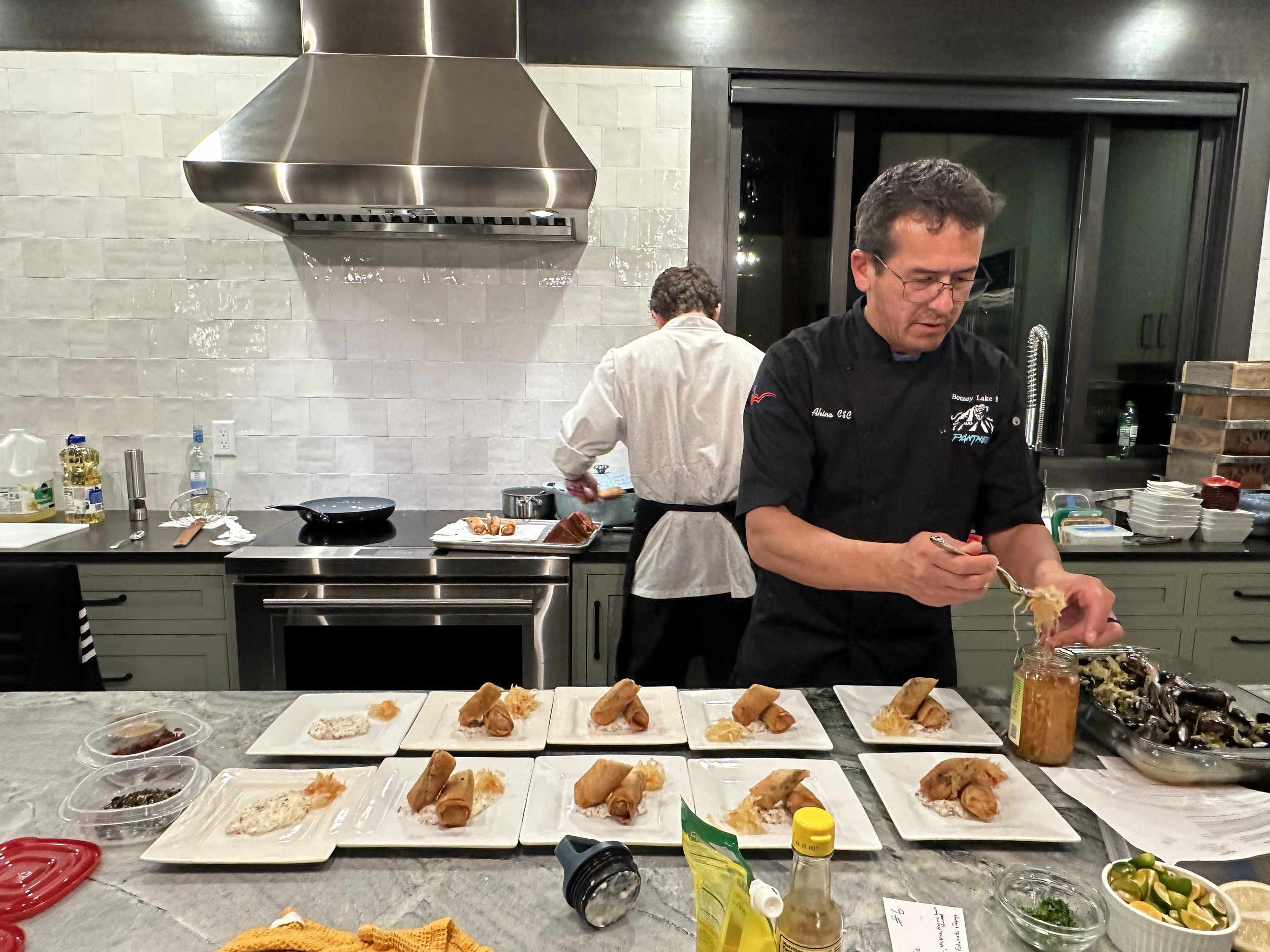
This show-stopping dish brings together heritage, craftsmanship, and aquaculture: kanpachi from the farm Mark helped build a hatchery, wrapped in a golden lumpia shell as an homage to his Filipino father.
This dish featured two ocean-farmed ingredients from the Big Island of Hawaiʻi: Blue Ocean Mariculture’s Kona kanpachi, seasoned with Lepe-o-Hina furikake and served with a Dragon’s Breath beurre blanc sauce. It was the favorite dish of the kitchen staff.
Okay, you got me. Lepe-o-Hina and Dragon’s Breath are two names for the same seaweed, available from Kona Limu Company. One ingredient, two names, beautiful oceanic brine and umami flavor.
We talked about America’s deepwater marine aquaculture industry and explored the similarities and differences between Hamachi and Hawaiian kanpachi. We discussed how Seriola species can differ in flavor, fat content, and texture depending on the species and the waters in which they are raised, from cooler temperate environments to warmer tropical waters. Following on the heels of the seagrape salad, we talked about how to incorporate more ocean vegetables into a dish.
Before the dinner, none of the guests had tried this dish. By the end of the night, four people had declared it their favorite course.
That’s a pretty good result for a fish many people may not have encountered before.
Course 7: Miso-Glazed Sablefish
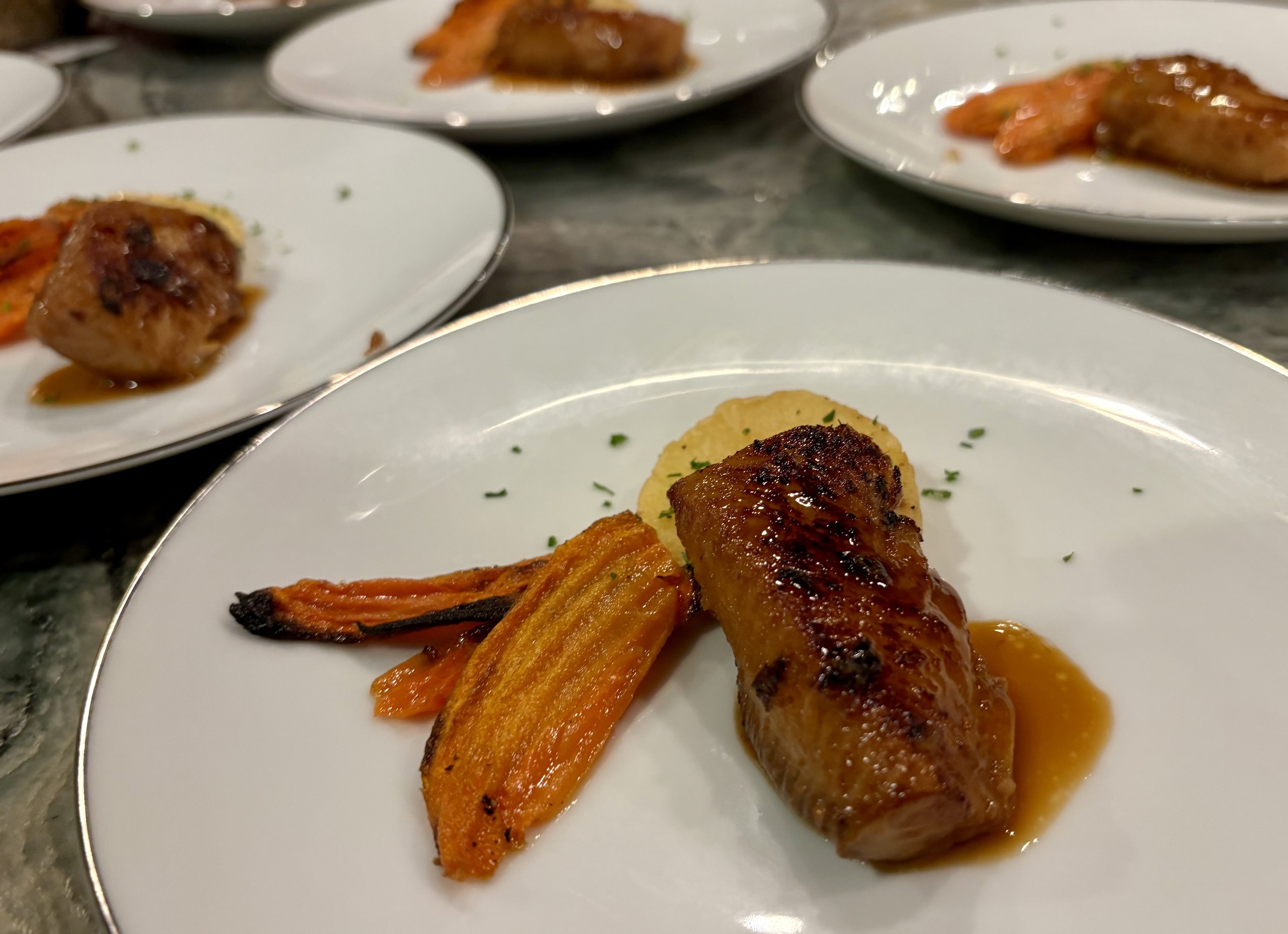
This sablefish dish highlights the species’ rich, buttery character while honoring the vital role of tribal aquaculture in advancing sustainable seafood, strengthening coastal communities, and carrying forward generations of knowledge and stewardship.
We finished the main courses with miso-glazed sablefish. A little more than half the guests had eaten sablefish, also known as black cod, before. None, however, knew that farm-raised sablefish was being produced right here in Washington through the Jamestown S'Klallam Tribe's aquaculture efforts.
By the end of the night, guests were already talking about eating it again. The fact that sablefish can be either wild-caught or farm-raised didn't seem to be a concern. Their questions were much more practical: Where do I get it? How do I cook it? How can I make more of it?
Those are exactly the kinds of questions we want people asking.
Dessert: Bringing the Menu Full Circle
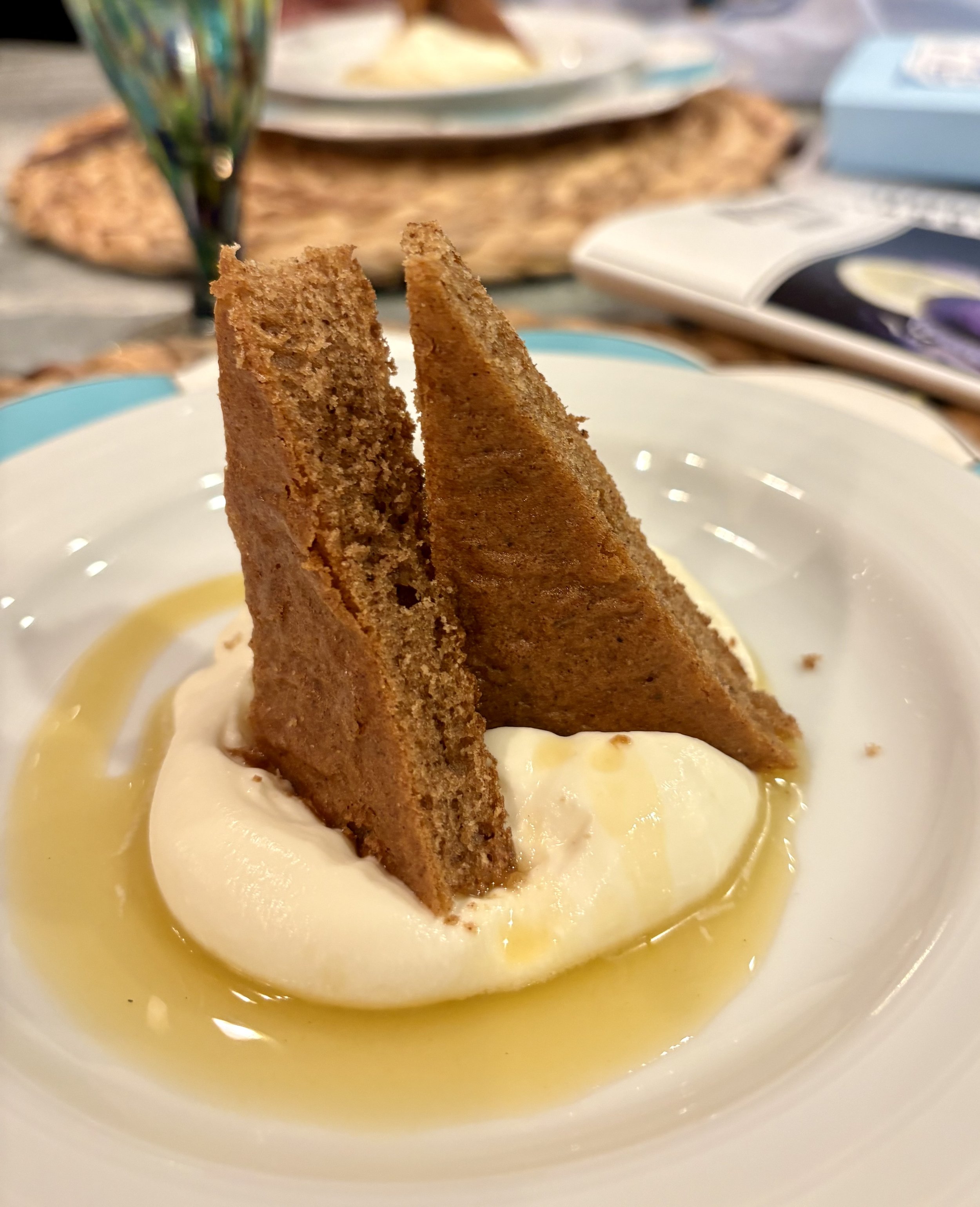
From the savory courses to the final dessert, calamansi provided a bright throughline—an elegant balance of citrus, sweetness, and acidity that lingered to the last bite.
We ended the night with a dessert that incorporated ingredients and flavors from nearly every dish on the menu, without actually including any fish.
The dessert was a ginger cake with calamansi citrus mousse and lemon gel. The bright citrus notes echoed the lemon served with the oysters and Mediterranean surf smelt. Ginger connected back to the shrimp toast, while calamansi had also appeared in the ponzu served with the tempura smelt. The heavy cream used in the mussel dish's blanc sauce provided another connection to the savory courses.
One guest pointed out that the dessert had elements of all the other courses, but no fish. So, we invited him back into the kitchen to enjoy some leftovers, which he happily did. He even took some mussels home with him.
And that's the kind of ending you hope for: guests who are comfortable enough to come into the kitchen, curious enough to ask questions, and enthusiastic enough to take a little more seafood home.
Not even 24 hours later, a pair of guests was already asking how we might host one of these dinners at her house. Another private supper club!
What Was the Point?
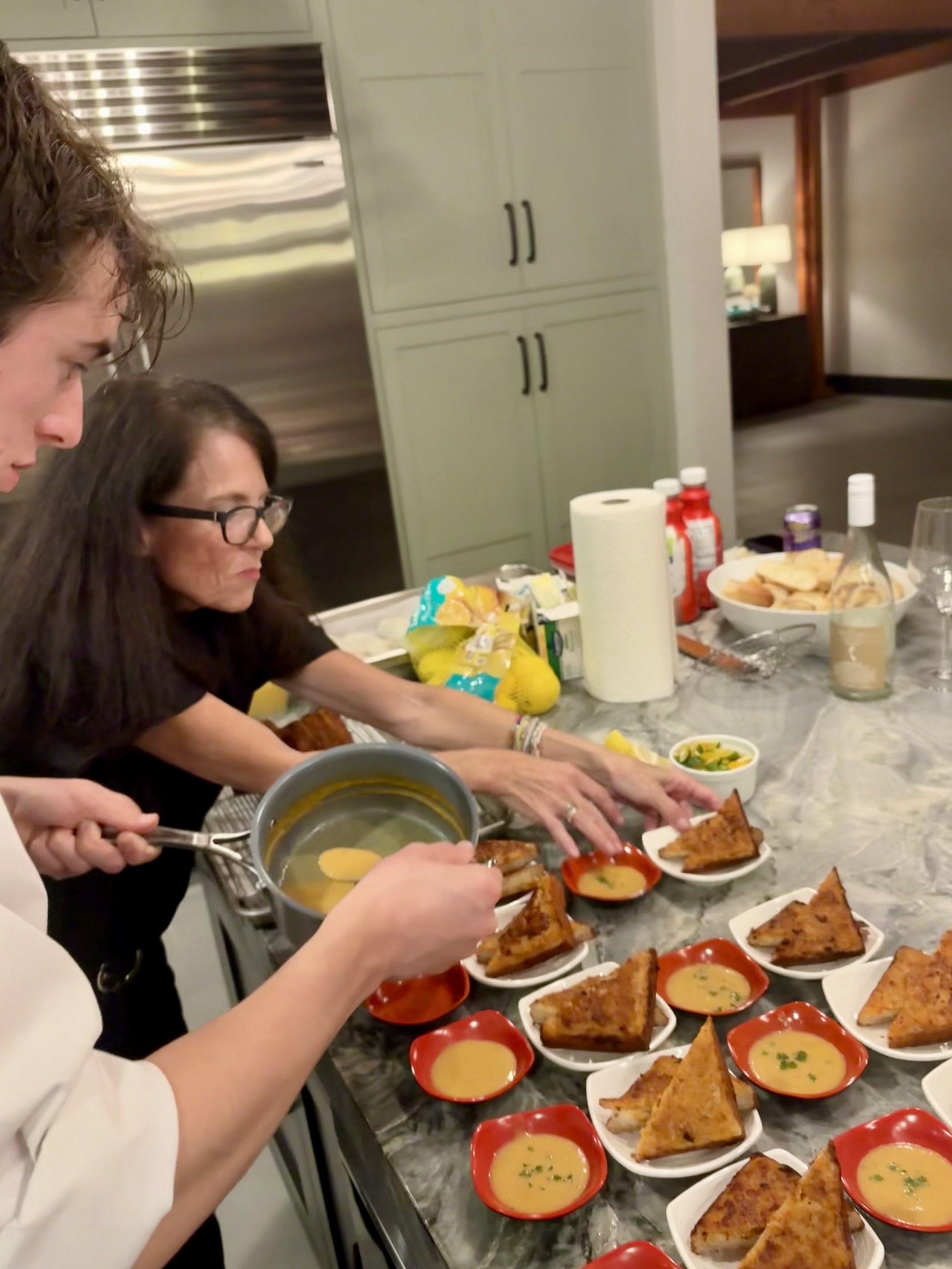
Tagal Oceanic’s Lisa Tagal, and Wyatt help bring the evening to life, carefully plating and serving each course with grace, precision, and warmth.
The fundraiser was about supporting the Orca Network, but it was also about making connections: between diners and producers, between seafood and its environment, and between the food on our plates and the ecosystems that support it.
We weren't going to turn ten guests into full-time seafood advocates in one evening. But we introduced them to unfamiliar species, showed them the differences between wild-caught and farm-raised seafood, taught them a little about merroir, and gave them reasons to seek out seafood they might otherwise have passed over.
If people leave a dinner asking where they can buy surf smelt, how to shuck an oyster, or where to find locally farm-raised sablefish, then we've done more than serve a meal. We've helped build a connection to the seafood industry and the waters that sustain it.
And if they go home wanting to eat more seafood, that's a pretty good bonus, too.
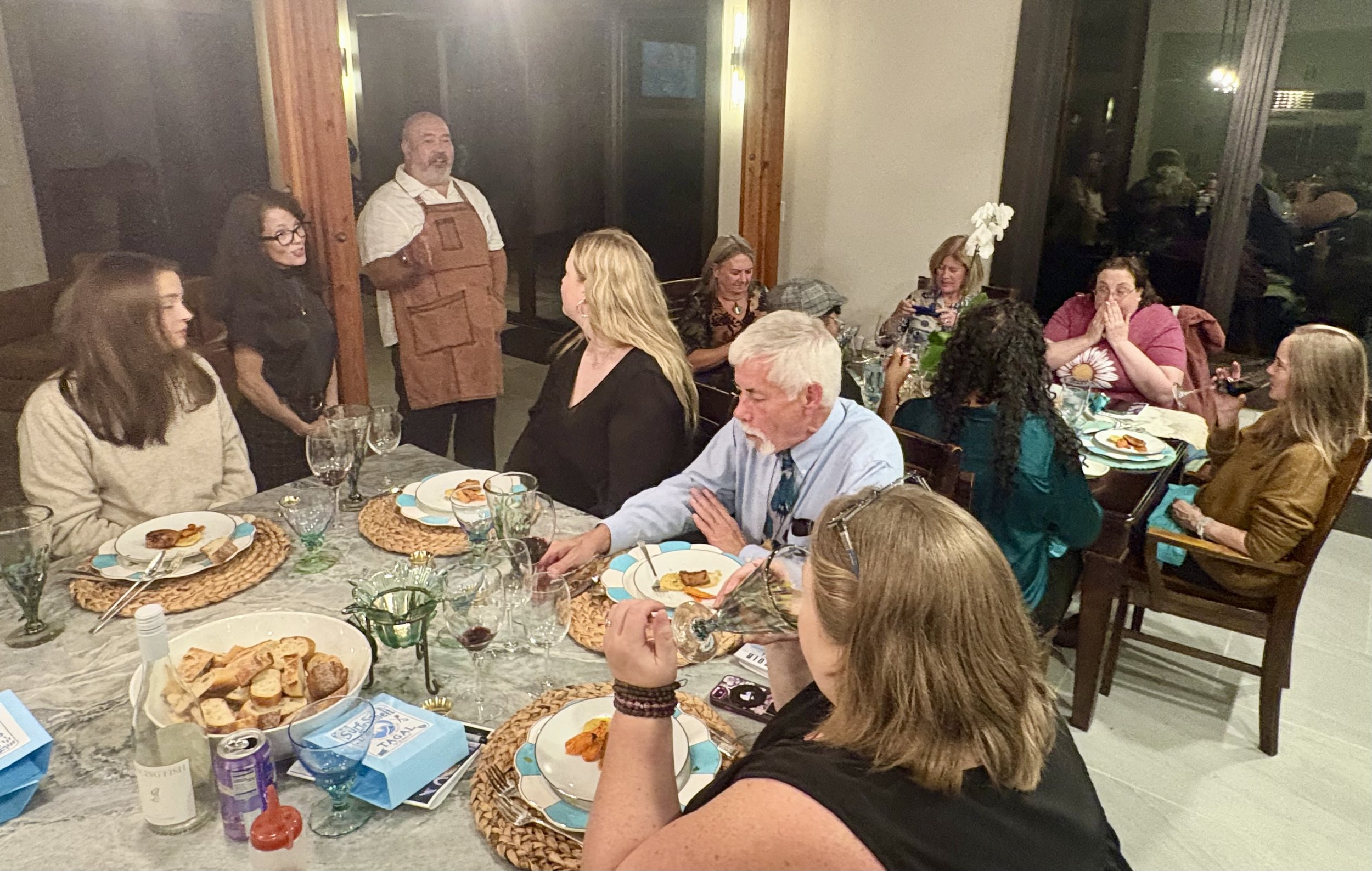
Mark and Lisa playing off each other in their signature style - Mark sharing his wealth of knowledge and Lisa interrupting him to share the personal connections to his stories.
With warm thanks to our phenomenal guests, generous seafood partners, vendor donations, the Orca Network, Holly Johnson Fox, Abby Thies, Chef Kahale Ahina, Wyatt Miller, and the ever lovely Barb French - we can’t wait to do it again next year!